
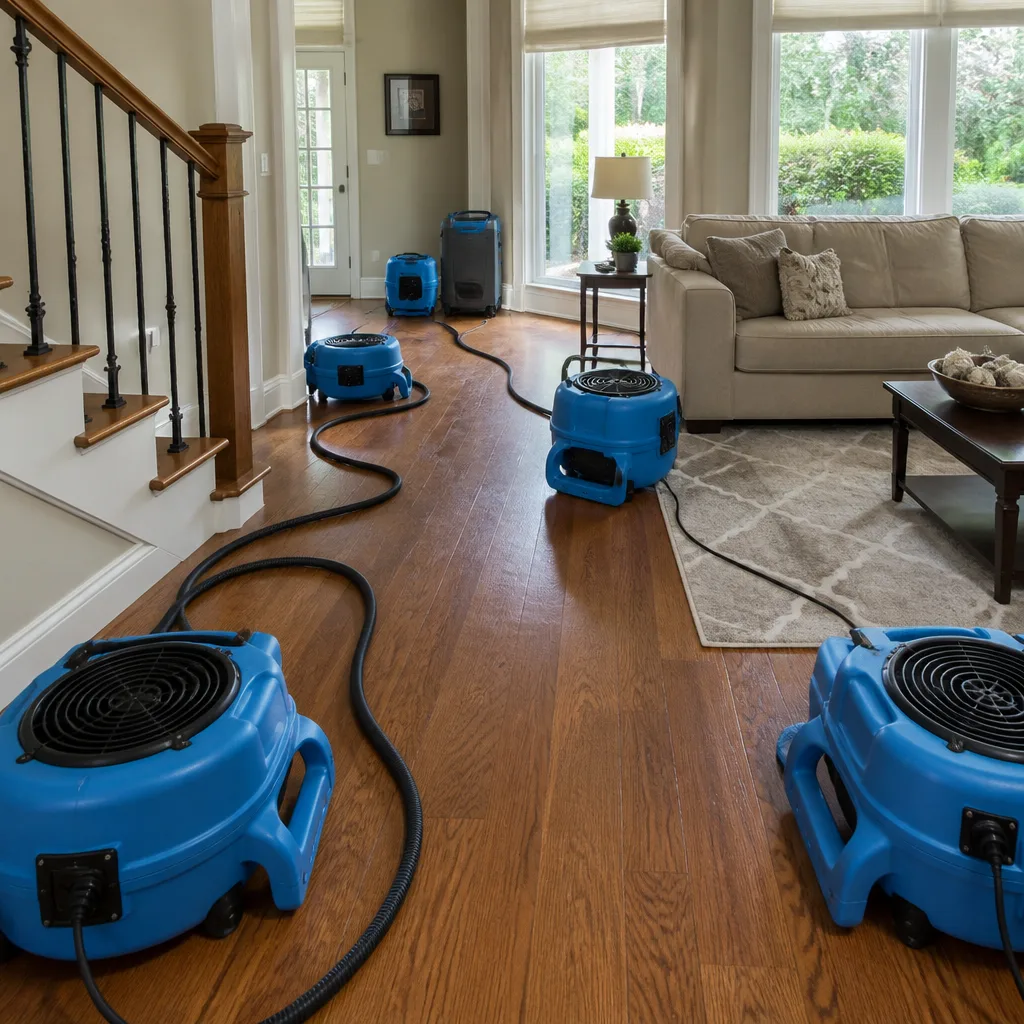
 Water damage drying
 Fire & smoke cleanup
 Mold remediation
 Storm response
 Sewage cleanup
 Reconstruction
Free visual inspection and a written scope of work before any mitigation begins - photos, moisture readings, and drying logs go in your claim file
The scope we write is the scope we bill. Anything new gets shown to you, in writing, before we touch it.
Get your free estimateRestoration work we handle
See the difference
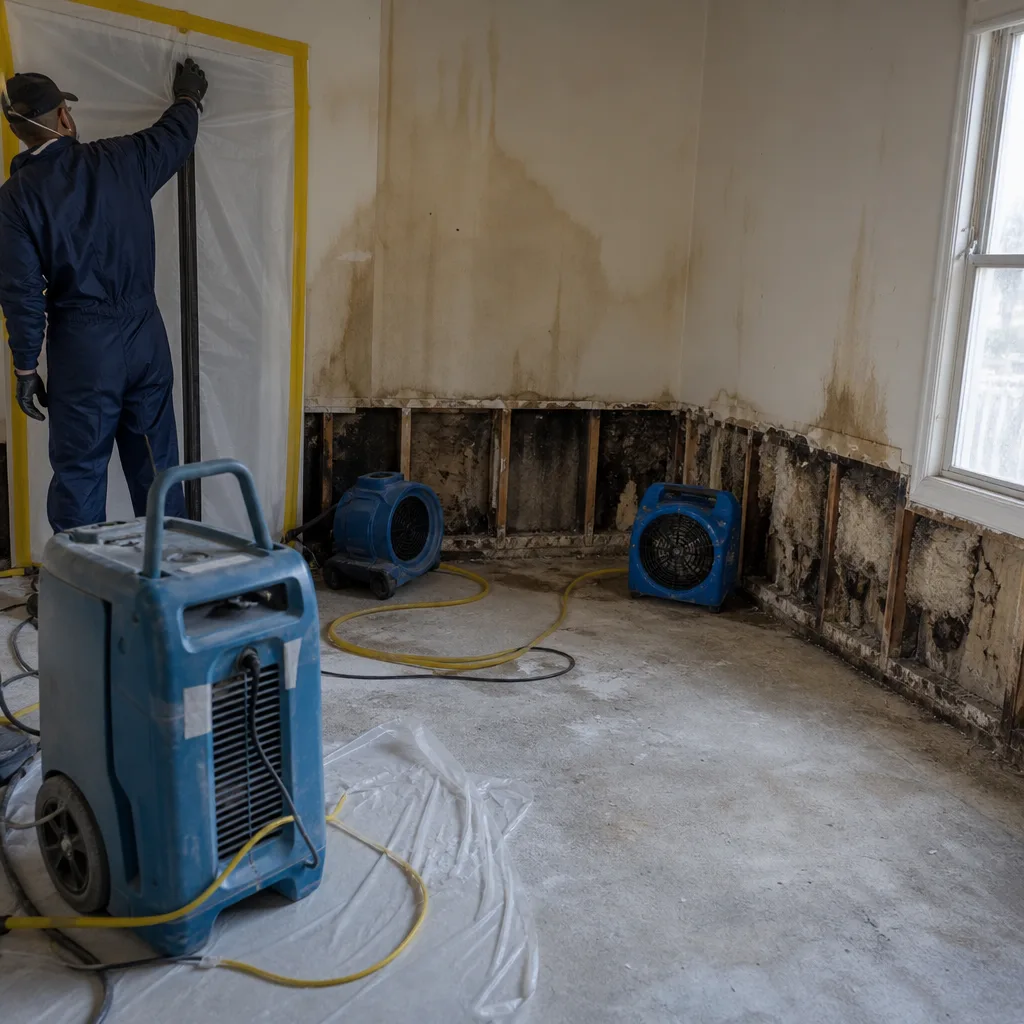 Before
 After
After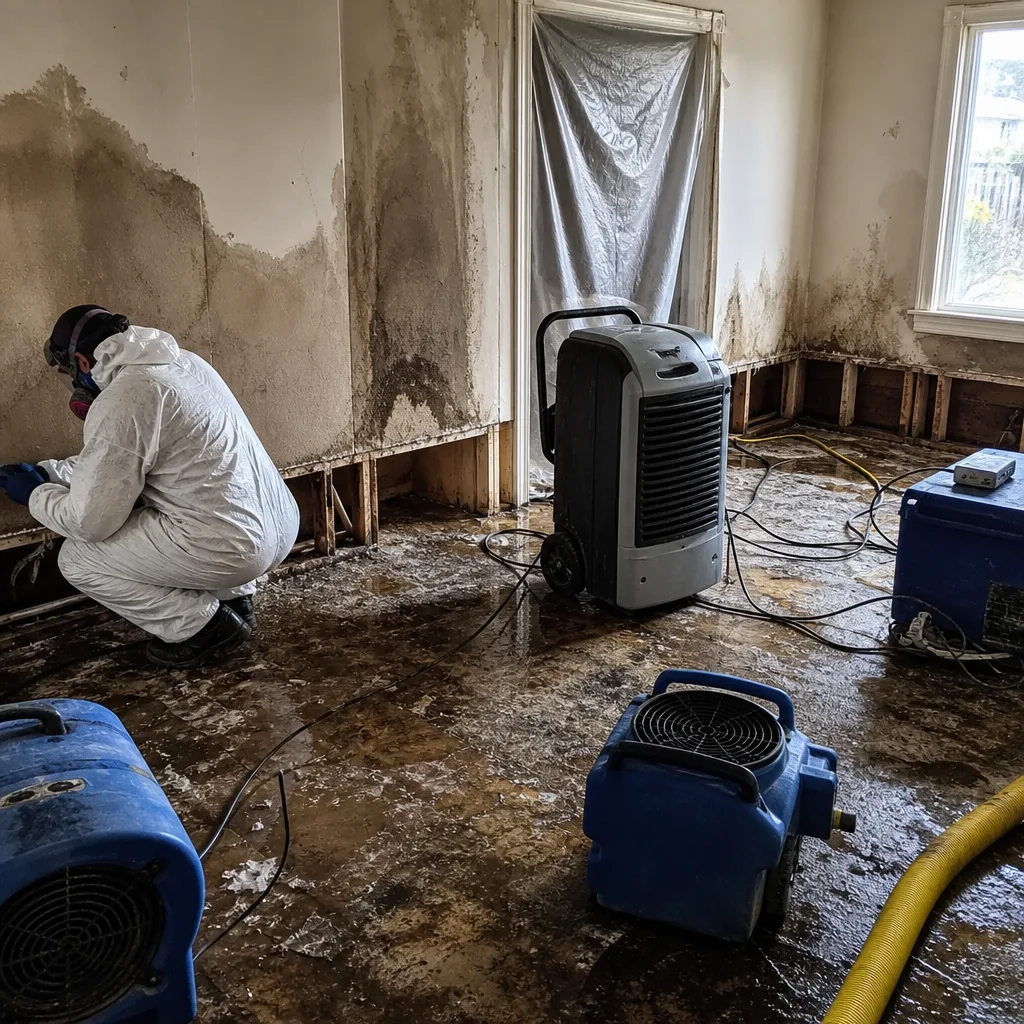 Before
 After
After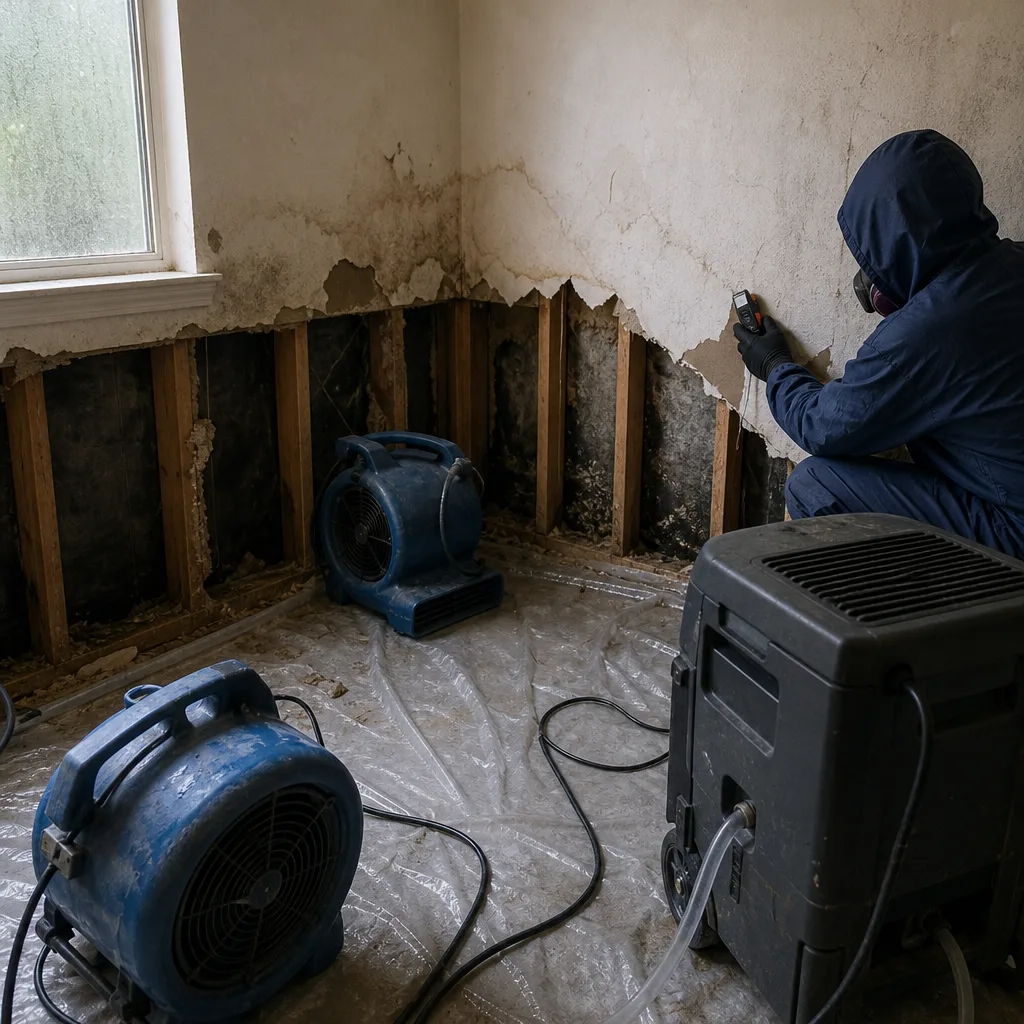 Before
 After
AfterBasement Water Removal in San Antonio, TX
Basement water removal in San Antonio typically costs between $800 and $3,500 depending on how much water came in and how far it traveled, and most emergency water extraction jobs can start the same day you call. At Tidemark Water Damage San Antonio, we respond to flooded basements across the city with professional-grade pumps and drying equipment, a written price before any work begins, and technicians who treat your home like their own. If you’re standing in water right now, call (325) 230-0537 and a live person will answer, day or night.
Basement flooding in San Antonio doesn’t play by the same rules as other cities. Our clay-heavy soil expands when wet and shrinks when dry, which puts constant pressure on foundation walls and basement slabs. When a summer thunderstorm drops two inches of rain in an hour, that water needs somewhere to go, and basements in neighborhoods like Terrell Hills, Alamo Heights, Castle Hills, and older pockets of Olmos Park often take the hit. Combined with our occasional hurricane remnants and the flash-flood corridors along Salado Creek and Leon Creek, a San Antonio basement can go from dry to ankle-deep faster than most homeowners expect, often requiring ceiling and roof leak water damage repairs when upper floors are affected.
This page covers what basement water removal actually involves, what it costs in San Antonio, and how our process protects your floors, walls, and air quality while the water comes out. For a broader look at how we handle water intrusion across the whole house, see our Water Damage Restoration guide.
Key takeaways:
- Most San Antonio basement extractions cost $800 to $3,500, with a written price before we start.
- We answer the phone 24/7 and typically arrive the same day for standing water.
- Every job includes shoe covers, drop cloths, and a photo of the clean-up before we leave.
- Our 365-Day Done Right Promise covers the work long after the crew has packed up.
When You Need Basement Water Removal
You don’t always need a truck full of equipment. Sometimes you need an honest answer about whether you have a problem at all. These are the situations where San Antonio homeowners call us most often:
- Standing water after heavy rain. Summer thunderstorms and fall hurricane remnants overwhelm drainage systems fast. If your basement has even an inch of water sitting against drywall or stored boxes, extraction should happen the same day.
- Rising groundwater after extended wet weather. Our clay soil holds water for days after the rain stops. Basements in lower-lying parts of San Antonio can see water seep up through floor cracks 48 to 72 hours after a storm.
- Water heater or washing machine failure. A burst supply line or a failed water heater in the utility area of a basement releases clean water, but it still saturates drywall, baseboards, and framing if it isn’t pulled out quickly.
- Sump pump failure during a storm. Many San Antonio basements rely on a sump pump. When the power goes out or the pump fails, water has no exit and starts collecting against the foundation walls.
- Musty odor with no visible water. A persistent damp smell in a basement often means water is entering behind finished walls. A tide mark, which is the line water leaves on a wall as it rises and falls, is the first thing our technicians look for on every job. Finding it early means a smaller repair.
- Efflorescence or white mineral deposits on walls. This white chalky residue appears when water moves through masonry and evaporates, leaving minerals behind. It’s a clear sign of repeated water intrusion, even if you’ve never seen standing water.
If any of these sound familiar, call (325) 230-0537. We’ll walk you through what we’re seeing, what it means, and what it costs before anyone heads your way.
Our Basement Water Removal Process
Basement water removal in San Antonio works best when it follows a set order: extract the water, find how far it traveled, and dry past the tide mark so hidden moisture doesn’t turn into mold inside your walls. Here’s how our crew handles a flooded basement from the first call to the final photo:
- We answer your call and ask the right questions. A live person picks up at any hour. We ask about the water source, how deep it appears, and whether any electrical panels or outlets are submerged. If power needs to be shut off for safety, we walk you through it on the phone.
- The crew arrives with protection already prepared. Shoe covers go on at the door. Drop cloths cover the floor before the first piece of equipment comes in. We ask before we move or touch anything, and we name what we’ll protect: your baseboards, your stored boxes, your kid’s play area at the bottom of the stairs.
- Extraction starts immediately. We use truck-mounted and portable extractors to remove standing water fast. For basements, we typically pair a high-volume pump with a smaller extraction wand so we can get water out of tight corners, behind stairs, and along wall edges where a standard pump can’t reach.
- We find the tide mark and map the water’s path. A tide mark is the line water leaves on a wall. We trace it around the whole basement, moving water-damaged baseboards and drilling small inspection holes where needed to see how far water wicked up into the drywall and insulation. In San Antonio’s clay soil, we also check the floor slab for hydrostatic pressure cracks.
- Drying equipment is placed to dry past the mark. We position Dri-Eaz air movers, Phoenix dehumidifiers, and XPOWER fans in a pattern that creates airflow across every wet surface. For water trapped inside wall cavities, we use Injectidry systems to pull air through the void without ripping out entire walls. Our IICRC-, RIA-, and IFA-credentialed technicians monitor moisture levels daily and adjust the equipment until readings return to dry-standard levels, not just until the visible water is gone.
- We photograph the clean-up before the crew leaves. You get a photo of exactly what was done and how the basement was left. No surprises, no guessing. If anything isn’t right, the 365-Day Done Right Promise means we make it right.
Every step follows the same standard: written price before work starts, pet-safe drying agents where there’s a choice, and lower-decibel settings during nap time and school hours. We know a basement flood is disruptive enough without a crew adding to the noise.
Basement Water Removal Pricing in San Antonio
Most basement water removal jobs in San Antonio run between $800 and $3,500, with the final number driven by three things: how much water came in, how far it traveled into walls and flooring, and whether drying equipment needs to run for two days or five. You’ll see the written number before we start, every time, with no line items added on the back end.
Here’s what a typical San Antonio basement extraction includes:
| Service | Typical Range | What It Covers |
|---|---|---|
| Water extraction only | $800 – $1,500 | Standing water removal, pump and extraction work, initial moisture assessment. Best for clean-water events caught early with no wall saturation. |
| Extraction + drying | $1,200 – $2,800 | Extraction plus 3 to 5 days of air movers, dehumidifiers, and daily moisture monitoring. Typical for rain-driven basement floods in San Antonio. |
| Extraction + drying + minor demo | $2,000 – $3,500 | Adds removal of saturated baseboards, drilled inspection holes, wall-cavity drying with Injectidry, and sealing after dry-down. Common when water sat overnight or wickedo into drywall. |
| Contaminated water (sewer backup) | $2,500 – $5,000+ | Category 2 or 3 water requires full containment, antimicrobial treatment, and flooring removal in most cases. We scope these individually. |
Several factors shift where your job lands inside these San Antonio ranges. Finished basements with carpet pad and drywall cost more to dry than unfinished concrete spaces. Water that entered through a foundation crack during a storm is typically cleaner than a sewer backup or burst pipe restoration scenario, which changes both the safety protocols and the equipment load. And a basement water heater failure caught within an hour is a different job from groundwater that seeped in for three days before anyone noticed.
We don’t charge for the estimate. Call (325) 230-0537 and we’ll ask a few questions about the water source and the space, give you a working range over the phone, and confirm a written price on-site before we pull a single tool off the truck.
What Makes Basement Water Work Different in San Antonio
San Antonio’s soil and weather create specific conditions that a generic water removal checklist doesn’t address. Our technicians live here and work in this clay every week, so the process we outlined above accounts for what actually happens under your house.
- Clay soil and hydrostatic pressure. When the heavy clay around your foundation expands after rain, it creates hydrostatic pressure that pushes water through the smallest cracks in your basement slab. We see this most often in older neighborhoods along the Salado Creek basin and in the lower areas of Hollywood Park, where the water table rises after sustained wet weather.
- Humidity lengthens dry times. San Antonio’s summer humidity means your basement won’t dry on its own the way a basement in West Texas would. We set dehumidifier targets for our specific climate and monitor daily because a basement that feels dry on the surface can still be holding moisture in the wall cavities at 70% relative humidity.
- Flash flooding after dry spells. Our soil goes from baked to saturated in a single thunderstorm. After long dry stretches, the ground resists initial absorption, causing water to sheet toward foundation walls and any low point in the slab. We plan for this in our response to every storm-season call.
- Foundation age and construction quirks. San Antonio basements range from newer sealed slabs to dug-out cellars in 1920s and 1930s homes in Monte Vista and King William. Older basements breathe differently, dry differently, and need a lighter touch with equipment placement. We ask about your home’s age and construction before we arrive so the first truck carries the right gear.
We mention all this because it affects your price and your timeline, and because we believe you should understand your own basement the way we do. If you’re curious about the broader scope of how water affects a Texas home, our Water Damage Restoration in San Antonio page walks through the whole-house picture.
FAQs – Basement Water Removal
How much does basement water removal cost in San Antonio?
Basement water removal in San Antonio typically costs $800 to $3,500 for extraction and drying, with higher ranges for contaminated water or finished basements that require flooring and drywall removal. You get a written price before any work starts when you call Tidemark Water Damage San Antonio, so the number you agree to is the number you pay. Call (325) 230-0537 for a free estimate and we’ll walk through your specific basement over the phone.
Can you come today for a flooded basement in San Antonio?
Yes, we run same-day response for basement flooding across San Antonio and typically arrive within a few hours of your call. Our phone is answered by a live person 24/7, not a voicemail queue, because standing water doesn’t wait and neither should you. Call (325) 230-0537 and we’ll get a crew dispatched immediately.
How long does basement drying take in San Antonio?
Most San Antonio basements need three to five days of professional drying with air movers and dehumidifiers, though high-humidity periods in summer can extend that by a day or two. We monitor moisture levels daily and adjust equipment until your walls and slab read dry-standard, not just until the visible water is gone. We’ll share the moisture readings with you throughout the process.
Is it cheaper to use a shop vac instead of calling a professional?
A shop vac handles surface water, but it cannot dry the water that has already wicked into drywall, baseboards, and subflooring, which is where the real damage happens. The fastest path to a smaller bill is fast extraction followed by proper drying, and doing both right from the start usually costs less than repairing the mold and framing damage that follows an incomplete cleanup. Estimates are free, so you can know the professional number before deciding.
Do you use products that are safe around kids and pets?
Yes, we use pet-safe drying agents wherever there is a choice, and our uniformed, background-checked technicians arrive with shoe covers and drop cloths as a standard step on every job. We also run equipment at lower-decibel settings during nap time and school hours so the drying process doesn’t add more disruption than the water already caused. If you have specific concerns about a pet or a child’s room, tell us on the call and we’ll plan around them.
Call Tidemark Water Damage San Antonio Anytime
A flooded basement doesn’t keep business hours, and neither do we. When you call (325) 230-0537, a live person answers, day or night. You’ll get a straight answer about what we’re seeing, a working price range over the phone, and a crew that arrives ready with shoe covers, drop cloths, and the right equipment to find the tide mark and dry past it.
We’re independently owned and operated, working to the Cedarwell Care Promise. That means a written price before we start, a photo of the clean-up before we leave, and a 365-Day Done Right Promise that stands behind the work long after the equipment comes out. When the water’s rising in your San Antonio basement, you don’t need a national call center. You need a neighbor who knows exactly where the water traveled and how to get your home dry again.
Call (325) 230-0537 now for a free estimate. The sooner we get the water out, the less of your basement it gets to touch.
Written by Rick Sumner, Owner at Tidemark Water Damage San Antonio, serving San Antonio.