
 Water damage drying
 Fire & smoke cleanup
 Mold remediation
 Storm response
 Sewage cleanup
 Reconstruction
Free visual inspection and a written scope of work before any mitigation begins - photos, moisture readings, and drying logs go in your claim file
The scope we write is the scope we bill. Anything new gets shown to you, in writing, before we touch it.
Get your free estimateFast, Reliable Fire Damage Restoration Across Castle Hills
A small kitchen fire in a 1960s Castle Hills home rarely stays small for long. Smoke pushes into wall cavities through cracks you never knew existed, water from the fire department pools under slab-on-grade flooring, and within days the odor settles into drywall and framing. Tidemark Water Damage San Antonio responds to Castle Hills calls the same day, with a written price in your hand before any equipment comes off the truck. If you’re standing in a soot-filled living room right now, call (325) 230-0537 and a live person will answer.
We know Castle Hills homes because we work in them every week. The expansive clay soils under Hitching Post Drive, Lockhill Selma, and West Avenue behave differently than the limestone bedrock under neighboring Shavano Park, and that changes how fire damage has to be addressed. A fire in a Castle Hills home is rarely just a fire. It’s smoke, water, and foundation movement all layered on top of each other. Our job is to separate those problems, tell you which is which, and fix them in the right order.
Why Tidemark Water Damage San Antonio Is Castle Hills’s Preferred Fire Damage Restoration Company
We’re independently owned and operated, working to the Cedarwell Care Promise, and led by Rick Sumner. That means no franchise playbook and no corporate script. When a Castle Hills homeowner calls us after a fire, Rick’s team shows up with background-checked, uniformed technicians who put shoe covers on at the door and drop cloths down before the first piece of equipment rolls in. You’ll see the written scope before we start, and you’ll see a photo of the clean-up before we leave.
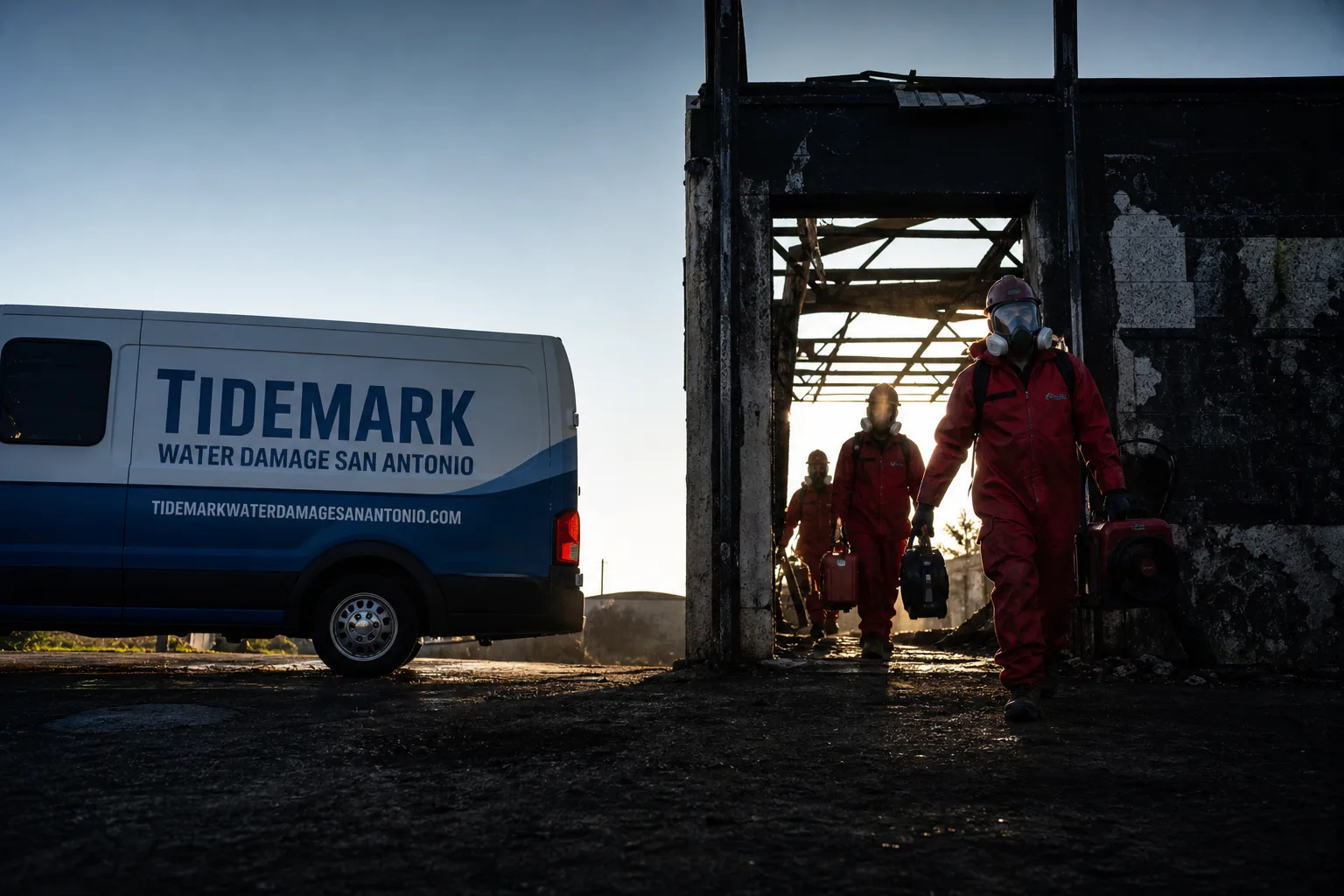
Our technicians carry IICRC, RIA, and IFA credentials, and they run Dri-Eaz air scrubbers and XPOWER air movers, the same machines used by leading restoration specialists. But the credential that matters most in Castle Hills is local knowledge. We know that diagonal cracks at door corners on a 1967 ranch off Hitching Post Drive are usually foundation movement, not fire damage. We know that water from firefighting wicks up through slab-on-grade floors and needs extraction beyond what visible staining suggests. A tide mark is the line water leaves on a wall, and it’s the first thing our technicians look for on every job. In Castle Hills, that tide mark often hides inside wall cavities and under flooring, driven there by the same clay soils that have been shifting these homes for fifty years.
Restoration work we handle
Fire Damage Restoration Company in Castle Hills
Fire Damage Restoration Company work in Castle Hills means more than removing charred drywall and running air scrubbers. It means understanding that the fire didn’t happen in isolation. The same expansive clay that cracked your masonry veneer before the fire is still there, still moving, and still capable of undoing a fresh rebuild six months after the crew leaves. Our Fire Damage Restoration team approaches every Castle Hills job as a two-front restoration: the visible fire damage and the structural movement beneath it.
Costs in Castle Hills run honestly. A typical fire damage cleanup with soot removal and odor control in a single room runs $1,800 to $4,200 depending on how far smoke traveled and how much drywall has to come out. A full structural fire repair with framing, drywall, and finish work in a Castle Hills home runs $12,000 to $38,000. Those are real ranges, not bait. You’ll see the written number before we touch anything.
When Structural Movement Meets Fire Damage
In Castle Hills, we regularly see fires that would be straightforward anywhere else turn complicated because smoke found its way into wall cavities through pre-existing foundation cracks. Clearing the char is the easy part. Finding the smoke that traveled through a diagonal crack at the door corner and into the stud bay is the part that separates a restoration from a repaint. We open those cavities only as far as needed, remove what can’t be saved, and document what we found so you’re not guessing later.
Written Scope Before Any Work Starts
Our crews don’t start demolition on a Castle Hills job until you’ve seen the written scope and price. It’s the same on every job, with no exceptions. That’s the Cedarwell Care Promise. Not a marketing line. A rule Rick Sumner enforces on every fire restoration we run in Castle Hills.
Smoke Damage Restoration in Castle Hills
Smoke Damage Restoration in Castle Hills homes has a quirk that homeowners in limestone-bedrock suburbs don’t face. Smoke travels the path of least resistance, and in a slab-on-grade house built in 1968, that path often runs through the same diagonal cracks that the clay soil created decades ago. You can scrub every visible surface and still have odor re-emerge three months later because smoke is sitting inside a wall cavity you couldn’t see. That’s why our smoke restoration starts with identifying how the house moves, not just where the soot is.
Smoke odor removal in Castle Hills typically runs $900 to $2,800 for a contained single-room fire, rising to $6,000 to $14,000 when odor has spread through HVAC ducts and multiple wall cavities. Soot removal from walls, ceilings, and contents usually falls between $1,200 and $3,500 depending on square footage and surface type. Again, written price first, every time.
Finding Smoke the Eye Can’t See
We use Dri-Eaz air scrubbers to pull airborne soot and odor particles out of the living space, but in Castle Hills we also inspect the envelope. A small separation of brick veneer from a window frame is often where smoke escaped the room and entered the wall assembly. Sealing that path before we finish the interior is what keeps the odor from returning after the last fan leaves the driveway.
Odor That Returns Months Later
When a Castle Hills homeowner calls us back because smoke odor returned after another company’s restoration, the cause is almost always the same. The techs cleaned visible surfaces but never opened the cavity behind the fire-stopped penetration or the slab crack where smoke settled. We find those pockets the first time, not the second.
Trusted Brands We Service in Castle Hills
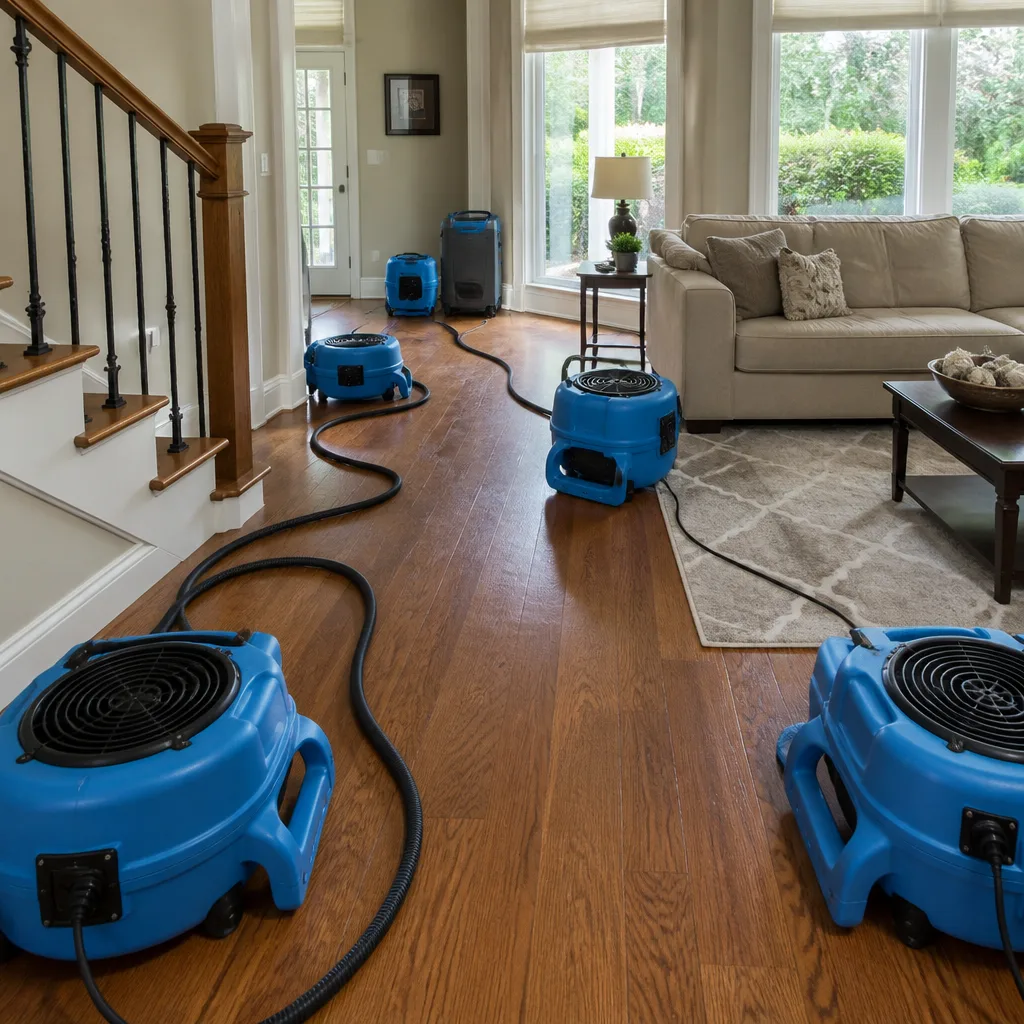
Castle Hills homes run on a mix of original 1960s construction and decades of remodels, and the equipment we use has to match. We run Dri-Eaz air scrubbers and dehumidifiers, XPOWER air movers, and Injectidry systems for drying inside wall cavities where moisture hides after firefighting. We stock common replacement filters, HEPA media, and antimicrobial treatments locally so Castle Hills jobs don’t stall waiting on a shipment from Dallas. Most single-room cleanups are fully equipped and running within hours of our first call.
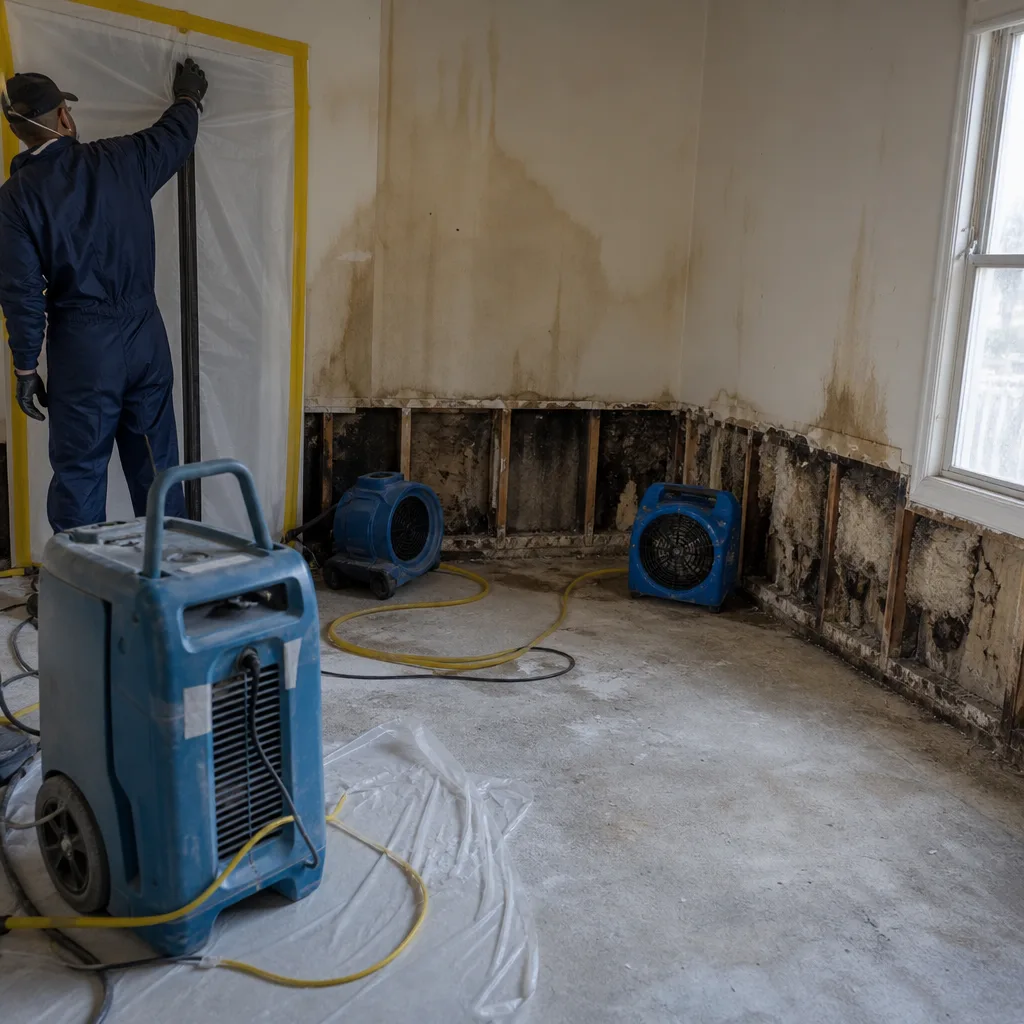
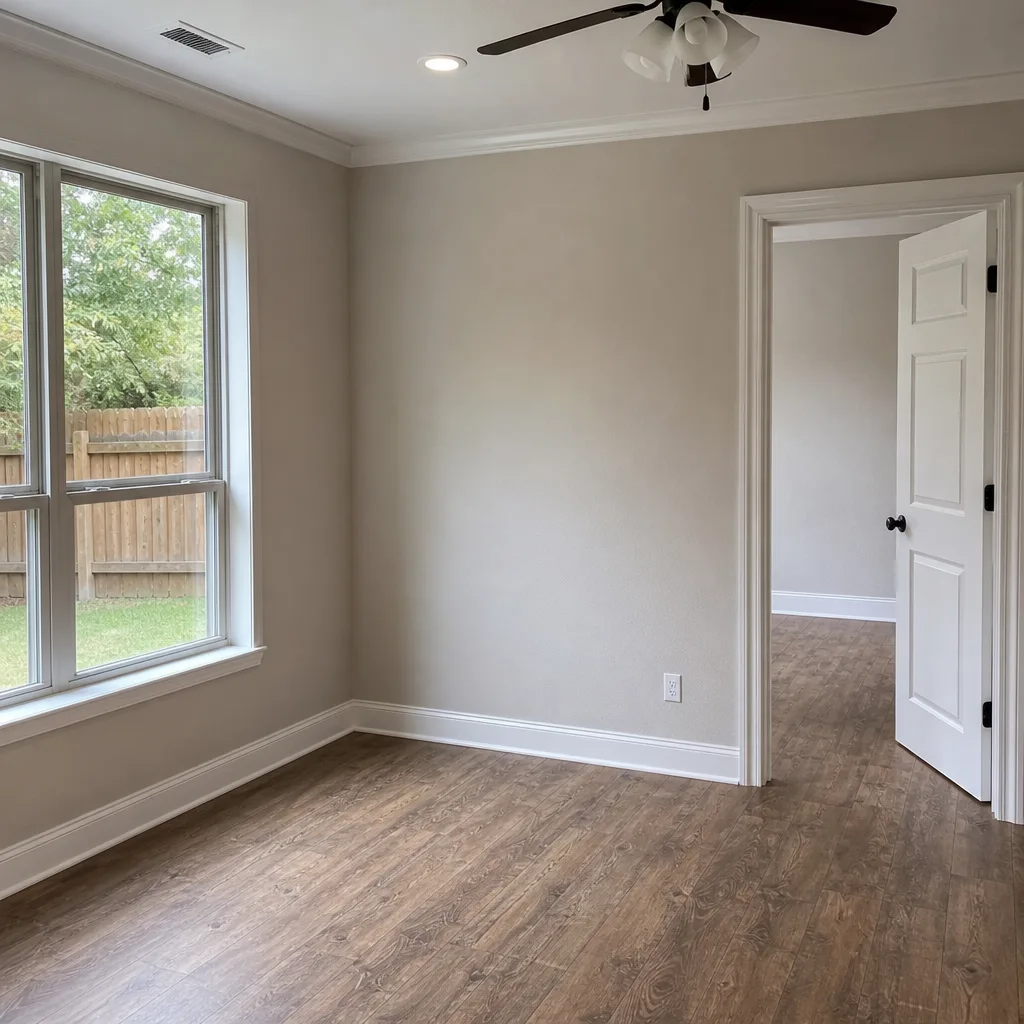
See the difference
 Before
 After
After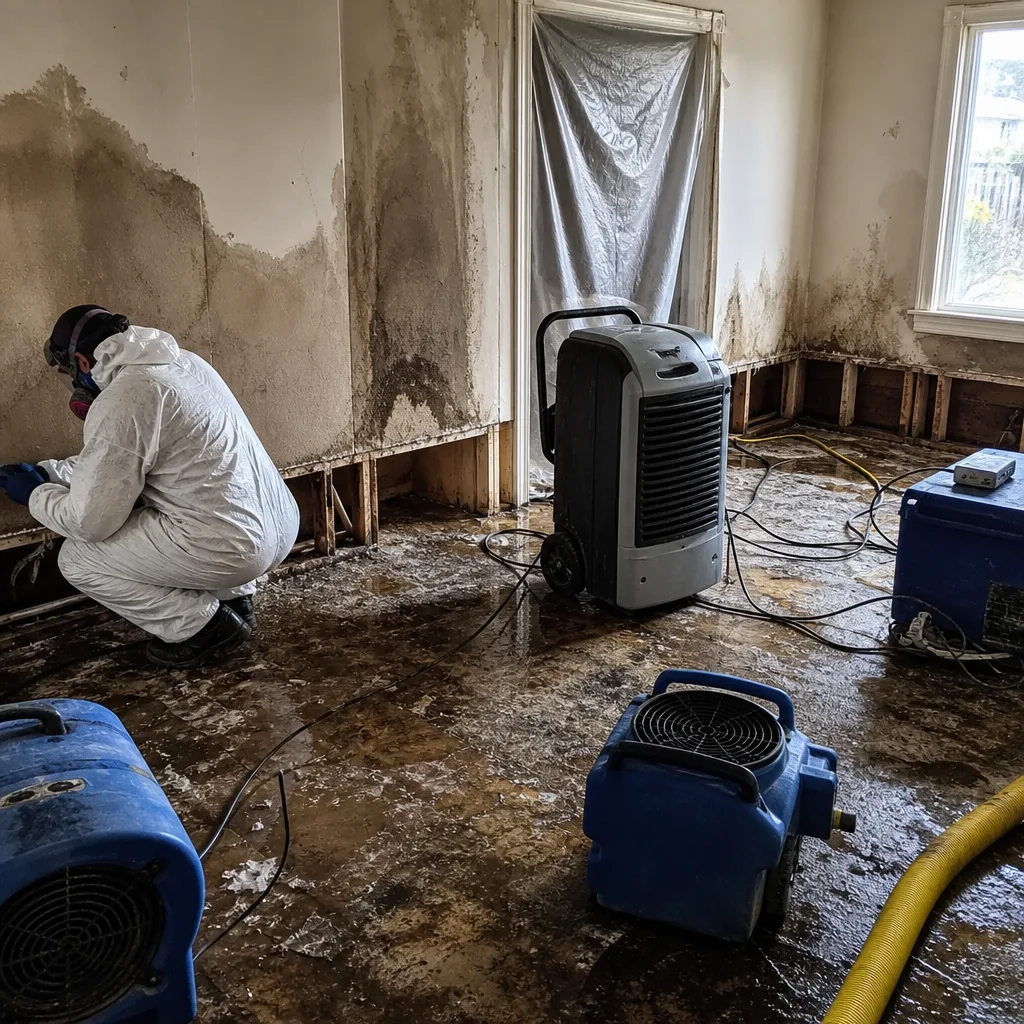 Before
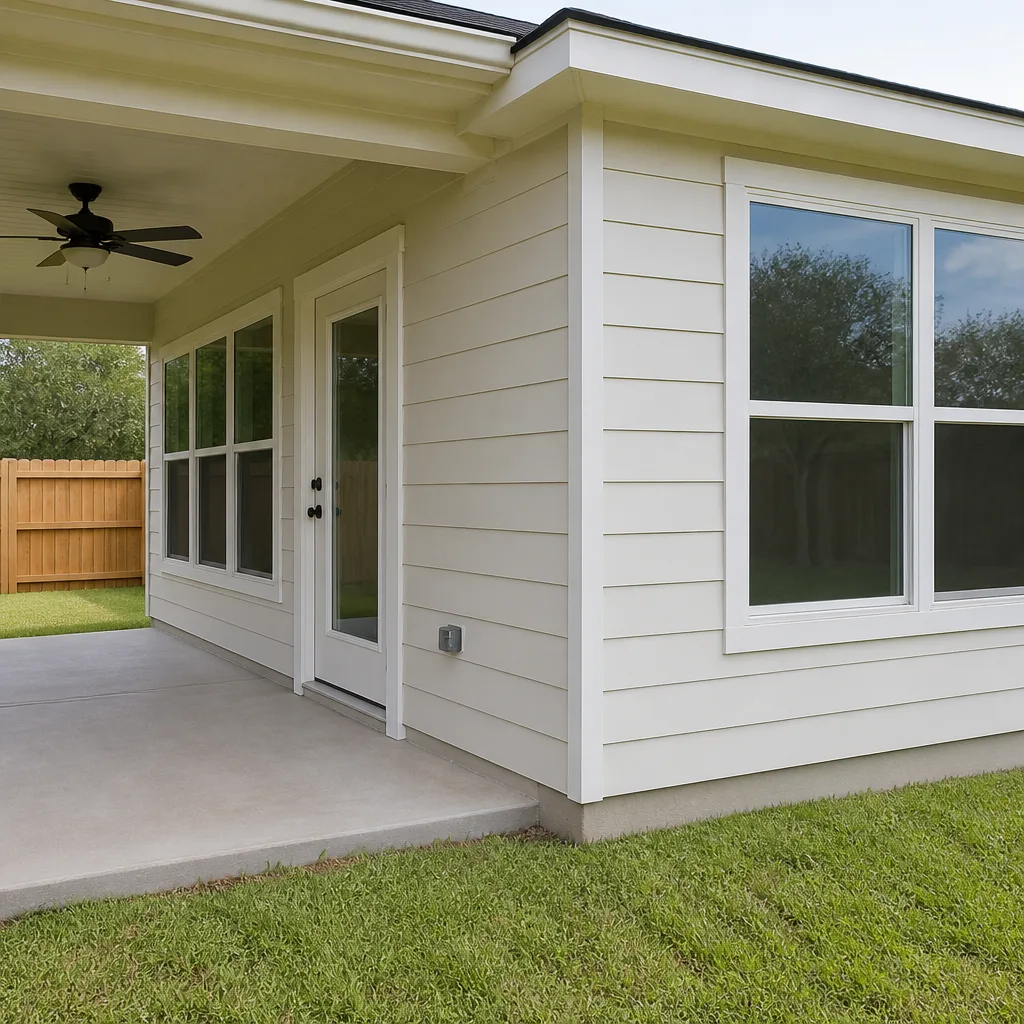 After
After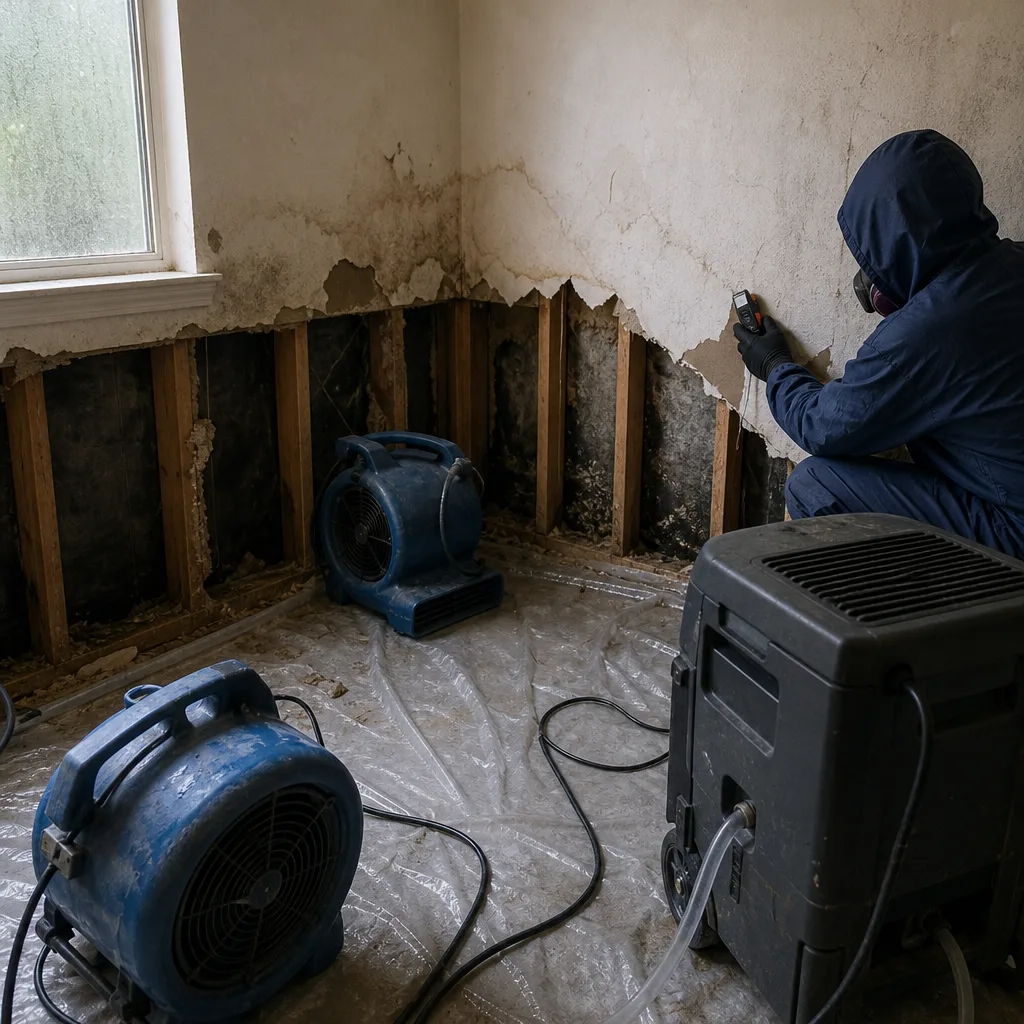 Before
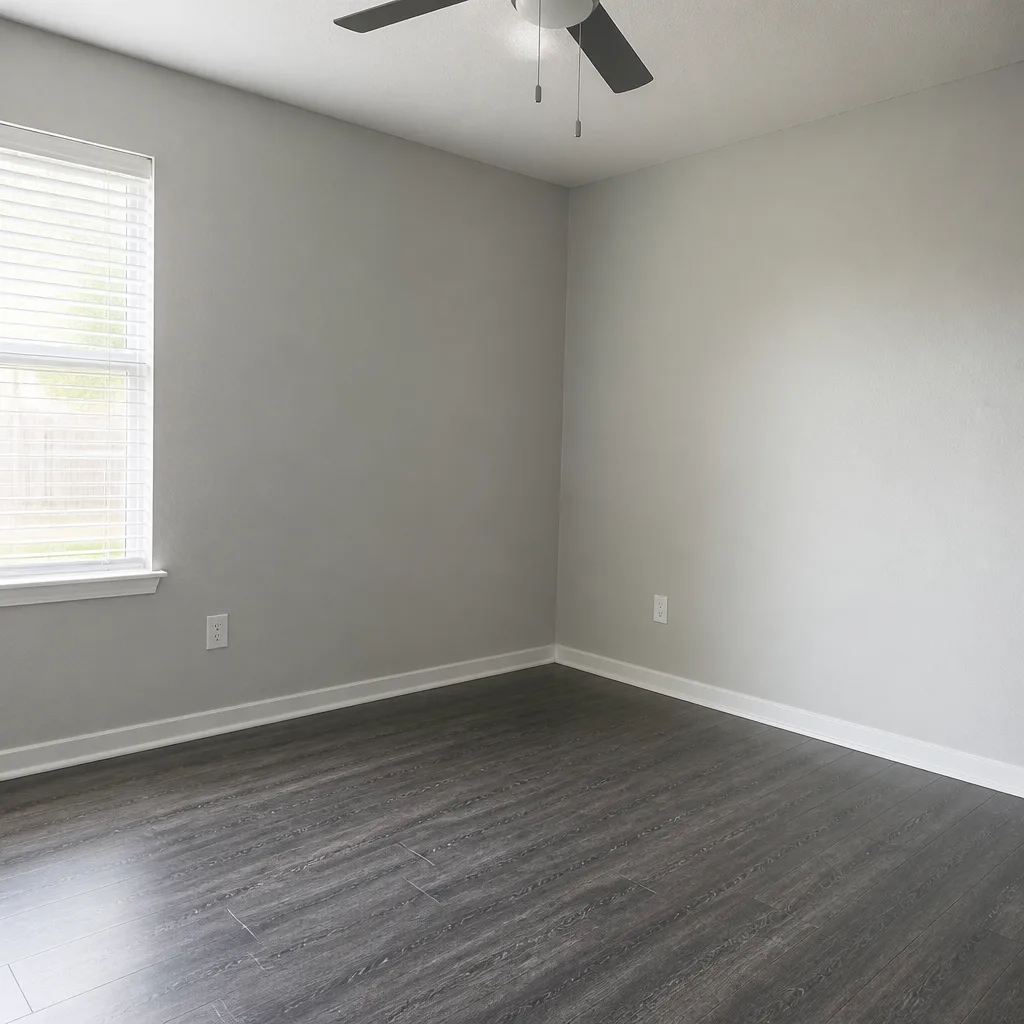 After
AfterCommon Fire Damage Restoration Problems We See in Castle Hills Homes
- Smoke hiding in foundation cracks. Clay soil movement opens diagonal cracks at door corners and window frames, and smoke follows those cracks into stud bays where it can’t be reached by surface cleaning alone.
- Water pooling under slab-on-grade floors. Castle Hills homes built from the 1960s onward sit on slabs that wick water upward after firefighting. That trapped moisture swells the clay, which shifts framing and can reopen fire-stopped penetrations weeks after the fire is out.
- Masonry veneer mistaken for fire damage. Cracked brick veneer from soil movement gets blamed on the fire, and contractors demo brick that didn’t need to come out. Stabilizing the structure first prevents unnecessary demolition.
- Recurring odor from unopened cavities. Technicians who only clean visible surfaces leave soot inside wall assemblies and under slab edges. The odor returns, and the homeowner pays twice. We open, document, and treat those spaces once.
Pricing for Fire Damage Restoration in Castle Hills, TX
Here’s what Castle Hills homeowners can expect. Fire damage cleanup with soot and smoke odor removal: $1,800 to $4,200 for a contained single room, $6,000 to $14,000 when HVAC systems and multiple wall cavities are involved. Structural fire repair including framing, drywall replacement, and finish work: $12,000 to $38,000 for a typical Castle Hills single-family home, higher if the slab itself needs attention. Smoke damage restoration alone usually lands between $900 and $2,800. Water extraction and structural drying after firefighting runs $1,500 to $4,500 depending on slab wicking and how far the clay soils have absorbed water. Every estimate is written and delivered before work starts. Call (325) 230-0537 for an exact quote, free.
We Also Serve Cities Near Castle Hills
Our crews work throughout Castle Hills and the surrounding communities. If you’re in San Antonio, Schertz, New Braunfels, or Fair Oaks Ranch and dealing with fire or smoke damage, the same written-price-first standard and the same 365-Day Done Right Promise apply. Call and a live person answers, 24/7.
Serving Castle Hills, TX - Our Local Coverage Area
We’re based in the Castle Hills area and know this community well. Use the map below to see our service coverage - if you’re nearby, we can almost certainly help.
FAQs About Fire Damage Restoration in Castle Hills
Smoke odor lingers because smoke travels into wall cavities through pre-existing cracks in Castle Hills slab-on-grade homes, and most restoration techs only clean the visible surfaces. The expansive clay under these homes opens diagonal cracks at door corners and window frames, and soot settles deep inside those cavities. We open, inspect, and treat those spaces, which is why our odor removal doesn’t come back months later. Call (325) 230-0537 if you’re still smelling smoke after another company finished the job.
A high water table means the clay under your slab is already partially saturated before the fire department ever arrives. Water from firefighting can’t drain downward, so it wicks up through the slab, swells the clay, and shifts the framing. Extraction and drying in Castle Hills takes longer than in nearby cities with better drainage, and skipping that step means your fresh rebuild cracks again in six months. We account for it in every Castle Hills scope.
If the cracks run diagonally from door corners or show separation at window frames, they’re almost certainly foundation movement from expansive clay, not fire damage. Fire causes spalling and surface pitting, not the diagonal patterns that come from slab movement. We stabilize the structure first, then restore the fire damage. Demoing brick over a foundation issue just means paying twice.
Castle Hills follows Bexar County building standards, which require replacement when drywall is charred, structurally compromised, or saturated by category 2 water from firefighting. Surface soot can often be cleaned and sealed. Burned or waterlogged drywall has to come out. We document what we remove and why, and you approve the written scope before any wall is opened.
Castle Hills sits on highly plastic clay that holds water much longer than the limestone bedrock under cities like Shavano Park. After firefighting, water sits under the slab and inside wall cavities with nowhere to drain. Our drying protocols using Dri-Eaz dehumidifiers and Injectidry cavity systems run longer here on purpose. Cutting drying short is how you end up with mold and recurring odor inside a fresh rebuild.
If you’re dealing with fire or smoke damage in Castle Hills, call (325) 230-0537 now. A live person answers. We’ll give you a written price, protect your floors and furnishings from the moment we walk in, and stay on the job until it’s done right. That’s the Cedarwell Care Promise, backed by the 365-Day Done Right Promise, and it applies to every Castle Hills restoration we do.
Written by Rick Sumner, Owner at Tidemark Water Damage San Antonio, serving Castle Hills and the surrounding communities.