
Last updated October 16, 2026
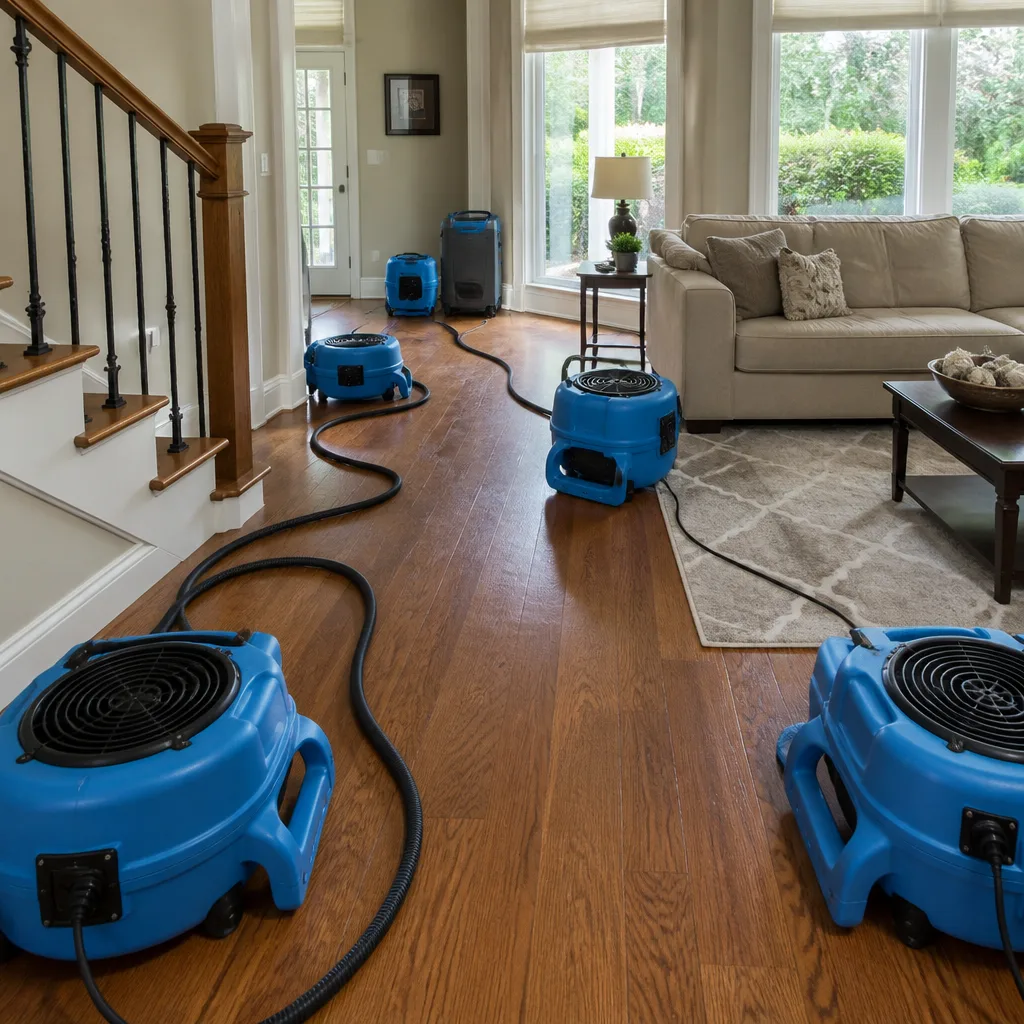 Water damage drying
 Fire & smoke cleanup
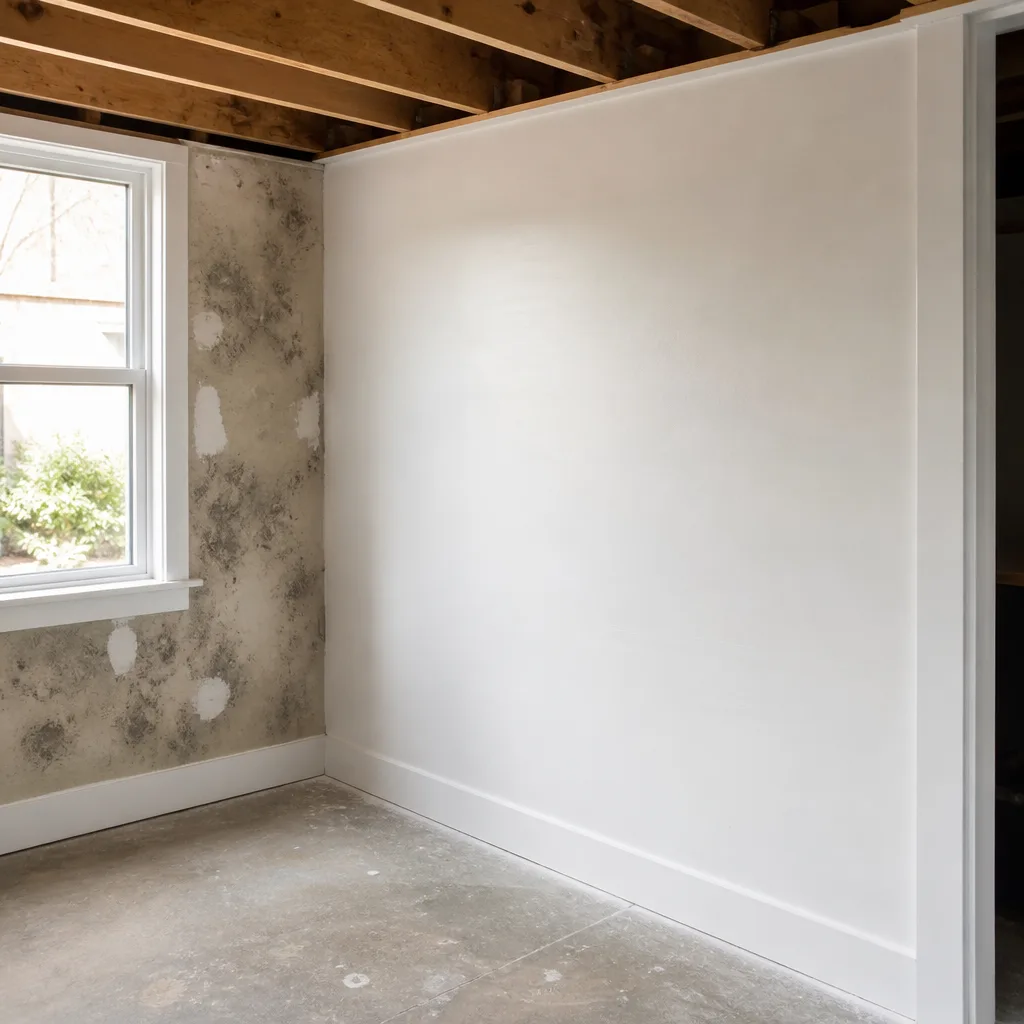 Mold remediation
 Storm response
 Sewage cleanup
 Reconstruction
Free visual inspection and a written scope of work before any mitigation begins - photos, moisture readings, and drying logs go in your claim file
The scope we write is the scope we bill. Anything new gets shown to you, in writing, before we touch it.
Get your free estimateDamage Restoration Warning Signs: A San Antonio Homeowner’s Reference Guide
Most guides tell you to watch for water stains on the ceiling, a musty smell in the hallway, or paint that is starting to peel. Here is the problem with that advice: by the time any of those appear, the damage behind the wall has been underway for weeks, sometimes months. A musty odor in a San Antonio home is detectable by human nose only after mold colony counts reach levels that already require professional remediation. The useful warning signs come three to six weeks before the smell. This guide covers those earlier indicators, the ones you have to know to look for, and pairs each sign with a clear explanation of what is happening behind the wall at that exact moment. For seasonal damage restoration care in San Antonio, timing your inspections right matters. If you live in San Antonio, where humidity, clay soil, and spring driving rains combine into a perfect storm for hidden water intrusion, this page was written for you.
Quick Answer
The earliest warning signs of water damage in a San Antonio home are rarely the ones most guides list. Before you ever see a stain or smell mildew, you may notice door frames that suddenly bind, grout lines that crack in uniform patterns, HVAC filters that load up twice as fast as normal, or a fine white powder on your foundation wall. Each of these indicates moisture is already moving through materials. If you catch them at this stage, remediation is often localized and significantly less expensive than it will be three to six weeks later.
Restoration work we handle
Table of Contents
- Early-Stage Warning Signs Most Homeowners Miss
- Efflorescence vs. Mold on a San Antonio Foundation Wall
- How to Self-Check Five High-Risk Zones with a Moisture Meter
- San Antonio-Specific Warning Signs: Stucco, Weep Screeds, and Driving Rain
- The Insurance Documentation Step Most Homeowners Miss
- What Is Happening Behind the Wall at Each Stage
- Common Mistakes to Avoid
- When to Call a Professional
Early-Stage Warning Signs Most Homeowners Miss
The signs that matter most are the ones that appear before water has pooled anywhere. In our experience working across San Antonio homes, the earliest indicators are behavioral changes in the house itself. Materials expand when wet. They shrink when dry. That expansion and contraction shows up in ways that most people write off as normal settling. Some of it is normal settling. Some of it is not.
Here is what to watch for in the first two to four weeks after moisture intrusion begins:
- Door frames that suddenly bind in summer. San Antonio sits on expansive clay soil. During dry spells, the soil contracts and foundations shift. That alone can cause a door to stick. But if a door that closed easily in May suddenly binds in July, and you have not had a plumbing event, moisture may be swelling the frame or the subfloor beneath it. Wood absorbs water and expands measurably, often before any visible discoloration appears.
- Grout lines that crack in consistent patterns. A single hairline crack in floor grout is usually harmless. But when grout lines crack in a repeating pattern, something beneath the tile is moving. Waterlogged subfloor, swollen underlayment, or saturated concrete can all flex enough to transfer stress into the grout. If you see cracks forming at the same points across multiple tiles, investigate what is underneath.
- HVAC filters loading faster than normal. This one is subtle but reliable. Early mold growth releases spores and hyphal fragments into the air before you can smell anything. Those particles get pulled into your return air and caught by the filter. If you typically change a filter every 90 days and suddenly the filter is visibly dark and loaded at 45 days, elevated particulates are circulating. The most common source in San Antonio homes is hidden moisture feeding microbial growth.
- Baseboards that pull away from the wall in one specific room. Wood and MDF baseboards absorb moisture from the bottom up. As they swell, they cup and pull away from the drywall. This happens before you see a stain, because the moisture is coming from below the baseboard, not through the wall cavity above.
- A floor that feels slightly soft or springy underfoot in one spot. If a section of laminate, vinyl, or hardwood floor has a little more give than the surrounding area, the subfloor beneath it is likely saturated. This is especially common in bathrooms, kitchens, and laundry rooms in San Antonio homes built with particleboard subfloors.
None of these signs requires a restoration crew today. But each one is a reason to investigate with a moisture meter that afternoon or the next morning. The earlier you confirm moisture, the smaller the repair footprint.
Efflorescence vs. Mold on a San Antonio Foundation Wall
This is one of the most misdiagnosed warning signs in San Antonio homes, and the misdiagnosis goes both ways. Homeowners who see a white chalky powder on a foundation wall sometimes assume it is mold and panic. Homeowners who see black staining sometimes assume it is dirt or soot and ignore it. Knowing the difference matters because the two substances indicate different moisture sources, and one of them requires an immediate professional response.
Efflorescence is a white, chalky or crystalline deposit that forms when water moves through masonry or concrete. As the water evaporates at the surface, it leaves behind dissolved salts. Efflorescence tells you that water is passing through the wall, not necessarily that the wall is actively failing. In San Antonio, we see efflorescence most often on foundation walls in crawl spaces, on brick veneer, and on the interior side of basement walls in older homes. It is a chronic moisture signal, not an acute emergency. You should address the moisture source, but efflorescence itself is inert. It is not a health hazard.
Mold on a foundation wall, by contrast, is typically black, green, brown, or gray, and it has a fuzzy or slimy texture when active. Mold on a foundation wall indicates organic material is present, which usually means there is wood, drywall paper, or accumulated dust and debris on the surface. Concrete does not feed mold. So if you see mold color and texture on a foundation wall, the food source is something else, and that something else is likely already damaged.
Here is the practical rule for San Antonio homeowners:
- White, powdery, easily brushed off, no odor: likely efflorescence. Remove it, monitor the area, and find the moisture source before it becomes a bigger issue.
- Black, brown, or green, with a distinct musty or earthy smell, or a fuzzy texture when scraped: likely mold. Call a Mold Remediation in San Antonio professional. Do not attempt to remove it yourself with household cleaners, which can aerosolize spores.
- White powder that reappears within days of cleaning: active moisture migration. The wall is still wicking water. The source needs to be identified and corrected, otherwise the cycle will continue indefinitely.
We have walked into San Antonio homes where a family spent months treating efflorescence thinking it was mold, while the real problem, a slow leak behind a shower valve, went unnoticed one wall away. The lesson is not to guess. The lesson is to identify what you are looking at and then trace the moisture.
How to Self-Check Five High-Risk Zones with a Moisture Meter
A non-invasive moisture meter is the single best tool a San Antonio homeowner can own for early water damage detection. You can buy a pinless meter at any hardware store for under $30. It works by sending a radio frequency signal into the material and measuring the return, no holes required. Here is how to use it effectively, including the five zones where we find the most hidden moisture in San Antonio homes.
- Under every sink, inside the cabinet floor. Run the meter across the cabinet floor, especially in the back corners where supply lines and shutoff valves sit. A reading above 12 percent on wood cabinet bottoms indicates elevated moisture. Above 17 percent means active saturation.
- Around the base of every toilet, on both sides. Wax ring failure is one of the most common slow leaks in San Antonio homes. The water wicks into the subfloor and under the vinyl or tile. Press the meter against the floor directly next to the toilet base. A reading that stays elevated hours after the bathroom was last used suggests the wax ring is allowing water through.
- Behind the washing machine, on the wall and the floor. Supply hoses and drain lines are both frequent leak points. Check the drywall behind the machine and the floor underneath it. If the wall reads above 15 percent, there is either a slow leak or condensation feeding into the drywall.
- On the ceiling directly below any upstairs bathroom or water heater. This is the classic hidden leak location. Water travels down and collects in the ceiling cavity before it ever shows a stain. By the time you see a yellow or brown ring, the drywall above is saturated. A ceiling reading above 14 percent in these locations warrants investigation even with no visible stain.
- Along exterior walls in rooms with high humidity. San Antonio’s spring and fall humidity can drive moisture into exterior wall cavities, especially in homes with older vapor barriers or none at all. Check baseboard-level drywall on exterior-facing walls in bathrooms, laundry rooms, and kitchens.
When using the meter, take readings in multiple spots across the same surface. A single high spot may be a false positive from a nail or wire. A consistent elevated band across a wide area means water is present. If you find readings above 15 percent anywhere, call us. Early detection on these five zones has saved San Antonio homeowners thousands of dollars compared to what full Water Damage Restoration in San Antonio would have cost a month later.
San Antonio-Specific Warning Signs: Stucco, Weep Screeds, and Driving Rain
San Antonio has a construction profile that makes certain water intrusion patterns far more common here than they are in Dallas, Houston, or Austin. Two of the most important ones involve stucco exteriors and the weep screeds that should be draining them. If you live in a San Antonio home built between roughly 1990 and 2015 with a stucco exterior, this section is for you.
Hairline cracks in stucco exteriors. Stucco is rigid. It expands and contracts at a different rate than the framing behind it. Over time, especially through San Antonio’s temperature swings, hairline cracks form. On their own, most are cosmetic. The problem is what happens during spring driving rain events, which are common in South Texas. Wind-driven rain hits the stucco at pressure, and water can be forced through even hairline cracks into the wall cavity. Once inside, it is trapped between the stucco and the water-resistive barrier. That trapped water promotes rot in the sheathing and framing. If you have stucco cracks wider than 1/16 inch, or cracks that run in a stair-step pattern, they should be sealed before the next storm season.
A compromised weep screed. A weep screed is the metal flashing detail installed at the base of a stucco wall. It is designed to let water that has made its way behind the stucco drain out at the bottom. If the weep screed is missing, buried in soil or landscaping, painted over, or clogged with stucco droppings from the original install, it cannot drain. Water pools at the bottom of the wall cavity and wicks up into the framing. The outward signs to look for: dark staining at the bottom edge of the stucco, stucco that stays damp at the base for days after a rain, and expanding cracks just above the ground line. Also check whether your foundation soil or landscaping is level with or above the weep screed. In San Antonio, we see this constantly: homeowners build up flower beds against the stucco, the weep screed gets buried, and the wall cavity becomes a standing moisture reservoir.
If you find either issue, fix the drainage first. No amount of interior drying will solve a problem that is being re-fed from the outside every time it rains.
The Insurance Documentation Step Most Homeowners Miss
Most San Antonio homeowners do this backward. They notice a warning sign, maybe a small water spot or a baseboard pulling away, and they call a contractor first. Before you make that call, read our step-by-step guide on hiring a damage restoration contractor in San Antonio so you know what to expect. The contractor looks, recommends work, and at some point later the homeowner calls their insurer. By then, the evidence has been disturbed, and the timeline is fuzzy. The insurer asks when the damage first appeared, and the homeowner says something vague like “a few weeks ago.” That vagueness complicates a claim.
Here is the step most homeowners miss: document the warning sign before calling anyone. That means photographing it, dating the photo, and writing down what you observed and when. A simple note on your phone works. Something like: “February 12: noticed the bathroom door binding at the top. No visible stain.” Do this for every warning sign you find. Then, and only then, call a contractor.
Why this matters: insurance claims for water damage live or die on the timeline. If you can show that you observed and documented the first indication of a problem on a specific date, and that you called a professional within a reasonable window after that, you have built a defensible narrative. You were a diligent homeowner. The damage was hidden. You acted promptly. That is exactly the story an adjuster wants to see, and exactly the file that supports rather than complicates a claim.
Take photos from multiple angles. Include something for scale: a coin, a ruler, a piece of paper. Take wide shots of the whole wall and close-ups of the specific area. Then email the photos to yourself so they carry a time and date stamp. If the claim requires proof of when you first noticed the issue, your email record is hard evidence.
One more note: do not attempt to fix, clean, or cover anything before you photograph it. We have seen San Antonio homeowners scrub away mold, patch drywall, or even repaint a ceiling, thinking they were doing the right thing. What they actually did was remove the evidence their insurer needed. Document first. Then act.
What Is Happening Behind the Wall at Each Stage
Understanding what is happening inside your walls at each stage of water damage helps you understand why early detection matters. It also explains why the repair cost escalates so sharply as time passes. Here is the sequence we see in San Antonio homes, week by week.
Week one through two: absorption. Water has entered a wall cavity, floor system, or ceiling. Drywall, wood, insulation, and carpet pad are all absorbing moisture. You cannot see anything yet. A moisture meter will show elevated readings. The materials are heavier, which may show up as a binding door or a creaking floor. If water is stopped and the area is properly dried now, the repair is often minimal: maybe a section of drywall, maybe nothing more than drying equipment run for a few days.
Week three through four: microbial activation. Mold spores, which are present in every home, find moisture and a food source, typically the paper face of drywall or the organic matter in carpet. Colonies begin to form. You still likely cannot smell anything, but your HVAC filter may be loading faster. If you act now, remediation is localized. The affected material is removed, the cavity is dried, and the repair footprint is still relatively small.
Week five through six: visible expression. This is where the guides start paying attention, because this is where you start seeing and smelling the problem. Discoloration appears on walls and ceilings. Paint bubbles. A musty odor becomes noticeable in the room, especially in the morning when the house has been closed up overnight. At this stage, mold is established. Professional Mold Remediation in San Antonio is required, and the affected area is larger than it would have been two weeks earlier.
Week seven and beyond: structural involvement. Wood framing has now been wet for nearly two months. That is enough time for rot to begin in untreated lumber, especially in the warm, humid conditions common in San Antonio. Laminate and engineered flooring are delaminating. Grout lines are cracking. The repair is no longer about drying; it is about removal and reconstruction. This is the most expensive stage, and the one most homeowners are in when they first call us.
The timeline is not exact for every home. A slow drip behind an upstairs bathroom in a San Antonio summer, with attic temperatures over 130 degrees, can accelerate the sequence. A small leak in an air-conditioned interior wall in December may take longer. The point is that the clock is running from the moment water enters, not from the moment you see it.
Common Mistakes to Avoid
- Waiting for a visible stain before acting. By the time you see a stain, the material has been saturated for weeks. If you have any of the early-stage signs described above, investigate now, not later. A $30 moisture meter and ten minutes of checking costs far less than opening a wall.
- Painting over a water stain or efflorescence. Paint does not stop moisture. It hides the evidence while the problem continues behind the fresh coat. If you paint over an active moisture issue in a San Antonio home, you will eventually be painting again and paying for remediation that is now deeper into the framing.
- Using a household dehumidifier as a substitute for professional drying. A big-box dehumidifier pulls humidity from the air, but it cannot move water out of wall cavities, subfloors, or framing. Professional drying requires equipment like the Dri-Eaz and Phoenix units we run, which create airflow and pressure differentials that pull moisture from inside materials. The household unit makes the room feel less humid. It does not dry the structure.
- Ignoring a spike in your San Antonio water bill with no lifestyle change. A leak behind a wall or under a slab can run for months before it shows any other sign. If your usage jumps by 20 percent or more and you cannot explain it, call your utility about a leak check or have a plumber investigate. The water is going somewhere.
- Buried weep screeds and dirt against stucco. This is the most common self-inflicted water intrusion problem we see in San Antonio. Keep soil, mulch, and landscaping at least four inches below the bottom edge of stucco. If you can see the metal flashing, it can drain. If you cannot, water is trapped.
- Trying to dry a flooded area with ceiling fans and open windows. In San Antonio’s humid months, opening windows actually adds more moisture to the air than it removes. And ceiling fans only circulate surface air; they do nothing for the interior of a saturated wall or floor cavity. The result is a home that feels drier while mold grows inside the materials.
- Filing an insurance claim without documentation. If you call your insurer before you have dated photographs and a written timeline, you are handing the adjuster a fuzzy story. Insurance companies are staffed by people who need proof. Give them proof.
When to Call a Professional
If your moisture meter shows readings above 15 percent in any of the five zones covered above, call a professional. If you smell a musty odor in one room and cannot locate a source, call a professional. If mold is visible in any amount larger than a few square inches, call a professional. If a water event, a burst pipe, an overflowing tub, a sewage backup, or a roof leak during a storm has occurred, call a professional that same day. These are not situations where waiting to see what happens is the right approach. The damage is established, and the clock is running on mold growth. Tidemark Water Damage San Antonio home offers free estimates throughout San Antonio. Our team answers the phone live, 24 hours a day, 7 days a week. Call (325) 230-0537 and we will walk you through what we are seeing and what the next step should be, with no pressure and no obligation.
See the difference
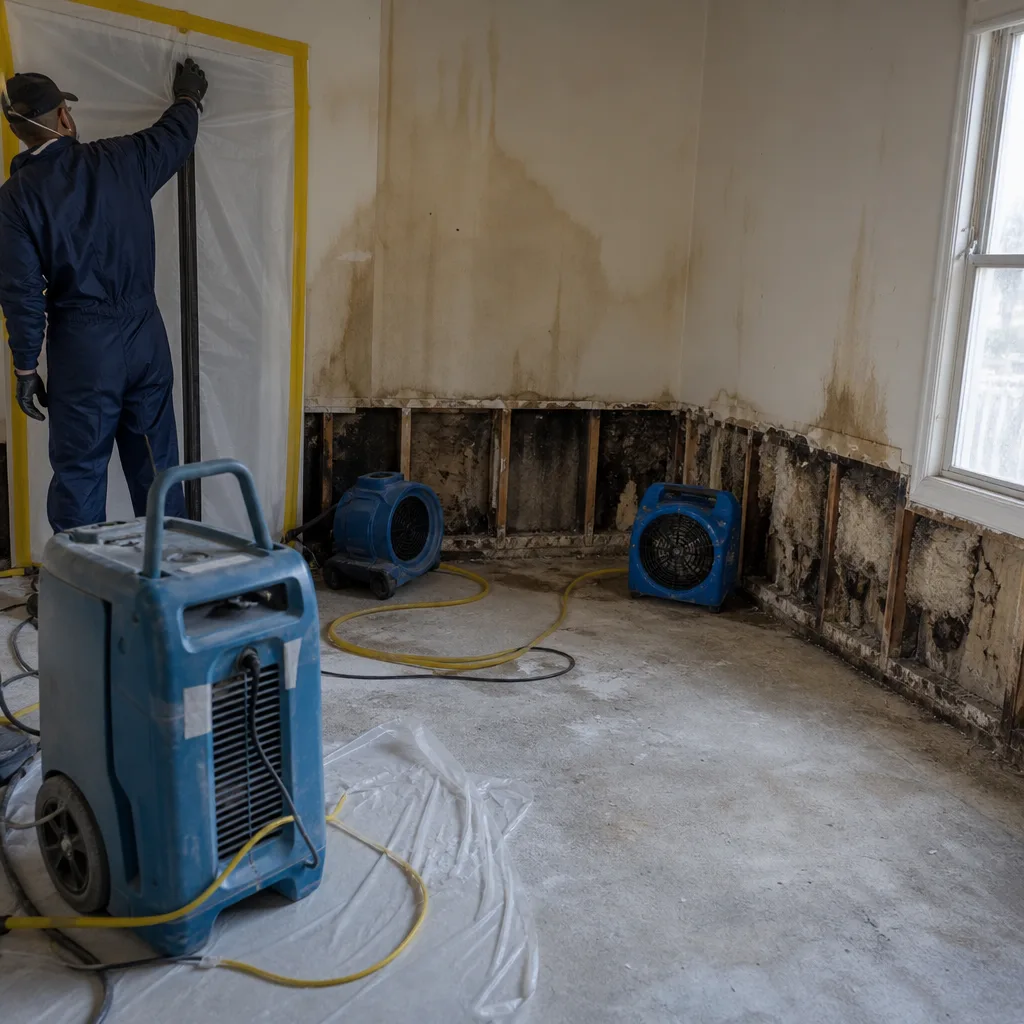 Before
 After
After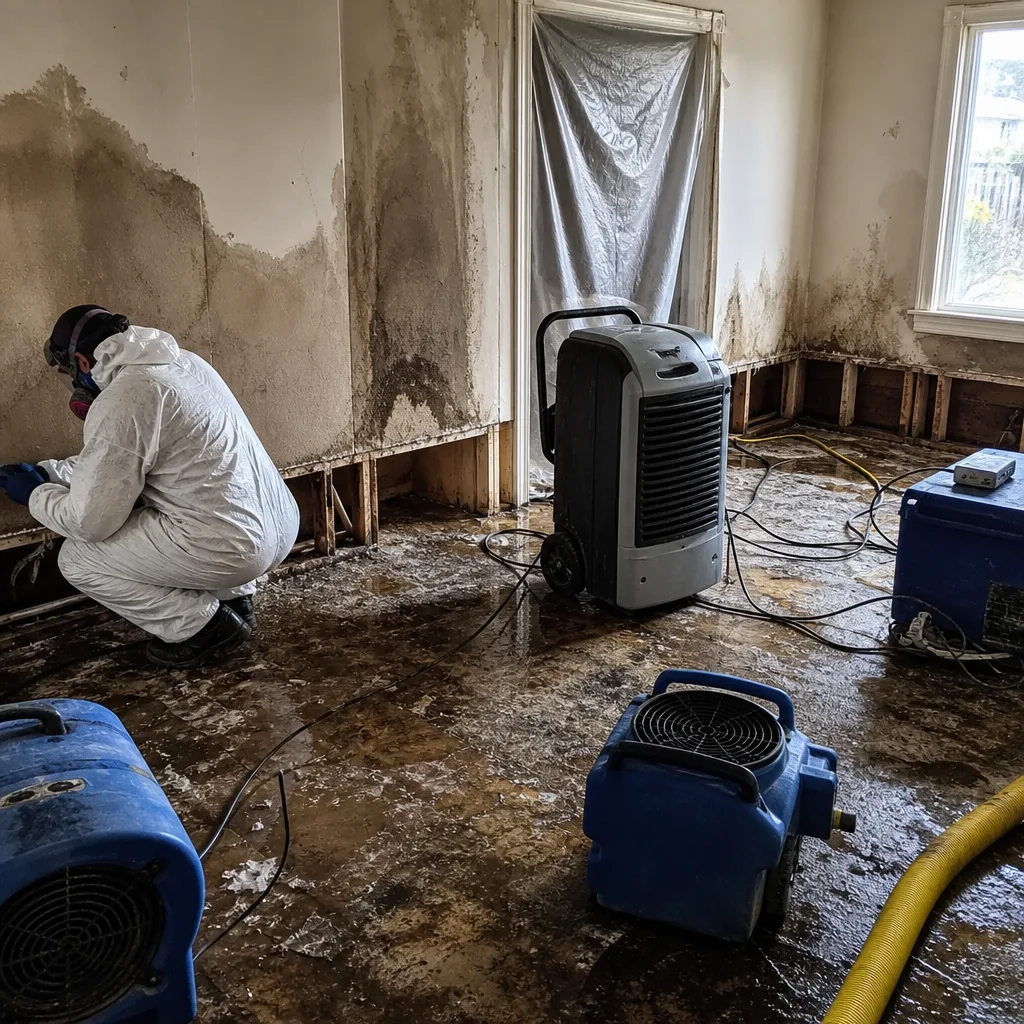 Before
 After
After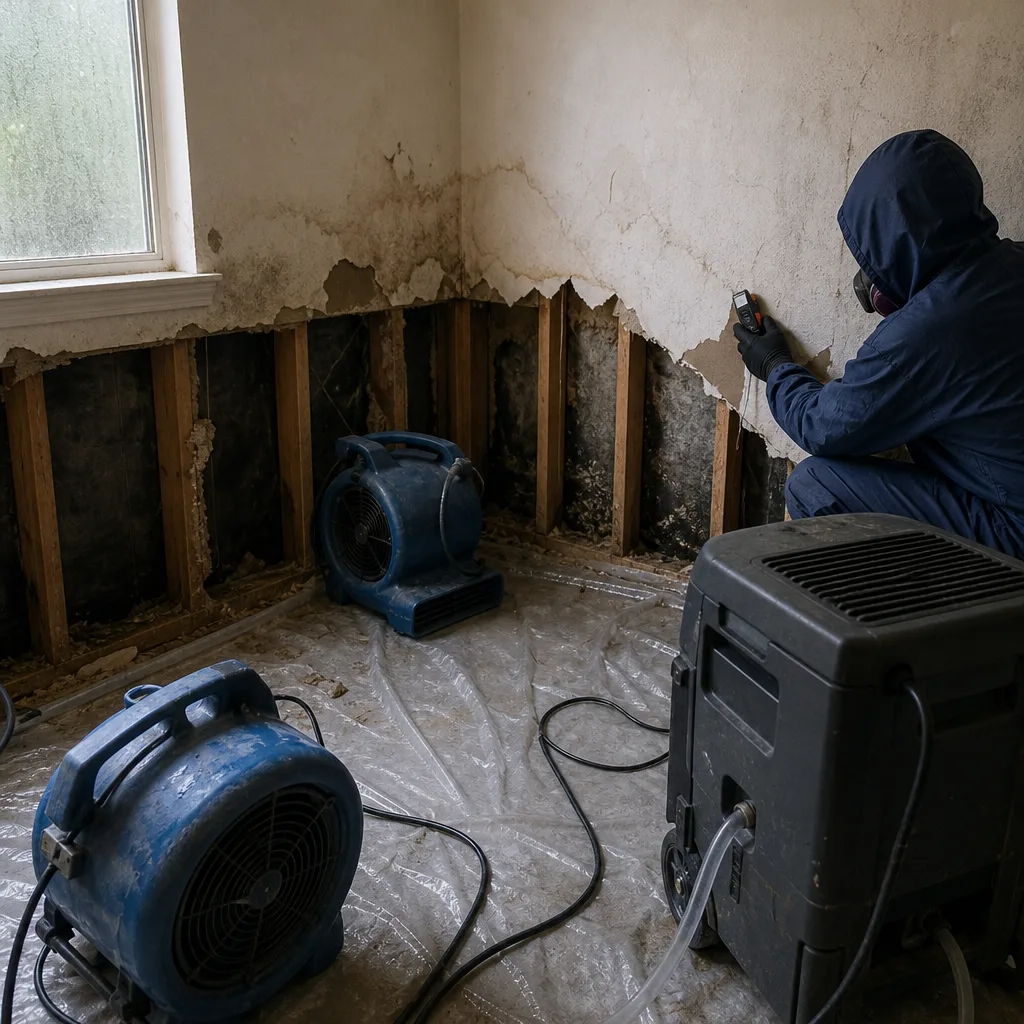 Before
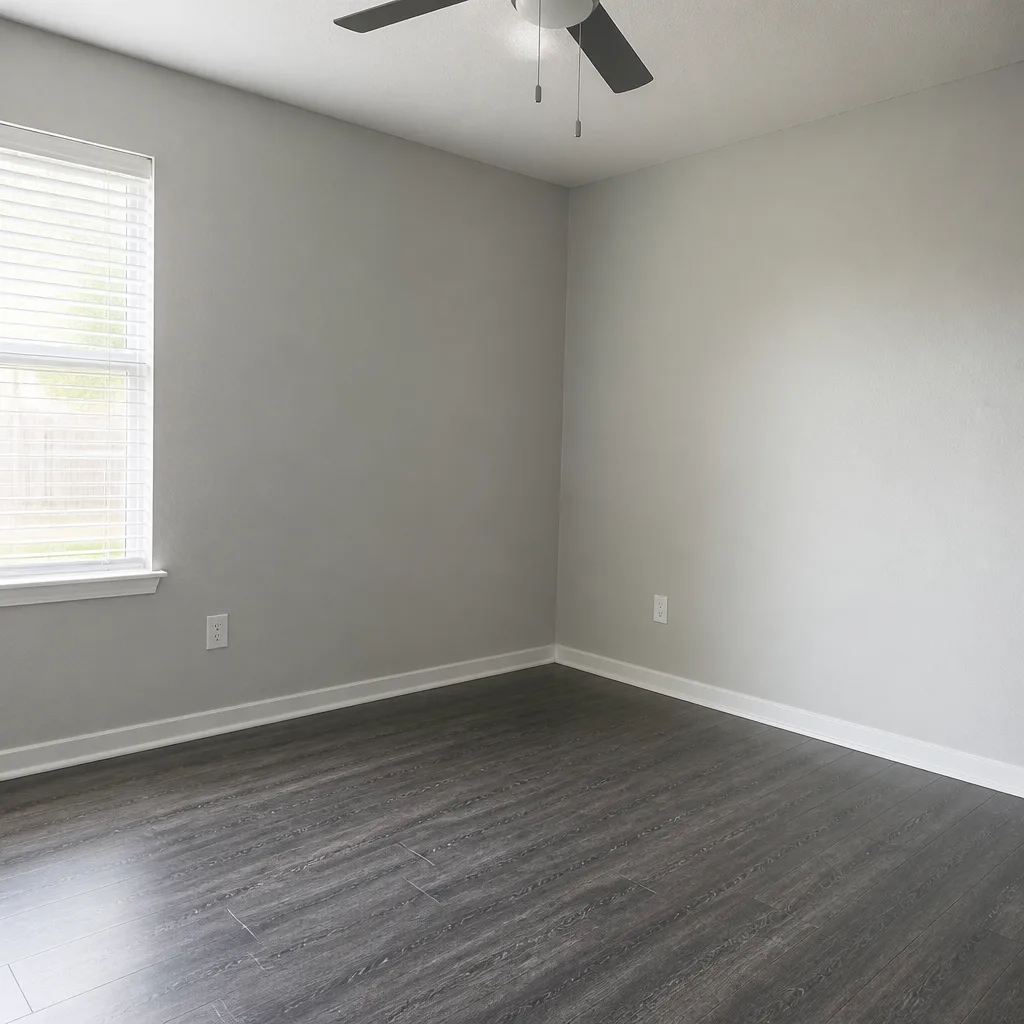 After
AfterFrequently Asked Questions
The earliest signs are doors that bind suddenly, grout lines that crack in repeating patterns, HVAC filters that load twice as fast as normal, baseboards pulling away from the wall in one room, and a floor that feels soft or springy in one spot. These appear three to six weeks before visible stains or a musty smell in most San Antonio homes. If you notice any of them, check the area with a moisture meter or call us for a free estimate at (325) 230-0537.
Efflorescence is a white, chalky, or crystalline powder that is easily brushed off and has no odor. It indicates water moving through masonry but is not a health hazard. Mold is black, brown, green, or gray, has a fuzzy or slimy texture, and produces a musty smell. If what you are looking at is dark, smells earthy, and does not brush off cleanly, treat it as mold and call a professional.
On most building materials, a reading above 15 percent indicates elevated moisture that should be investigated. Readings above 17 percent suggest active saturation. A single high spot may be a false positive from a nail or wire; a consistent elevated band across a surface means water is present. If you are getting consistent readings above 15 percent, call us for a professional assessment.
Most homeowners policies cover sudden and accidental water damage, not gradual damage that occurred over weeks or months. That is why documentation matters so much. If you date-stamp photographs of the first warning sign you noticed and call a professional promptly, you are building a file that supports your claim. If the evidence suggests you ignored the problem, the claim becomes much harder. For help navigating this, call (325) 230-0537 and we can advise you on what your adjuster is likely to ask for.
Household fans and dehumidifiers cannot remove water from inside wall cavities, subfloors, or framing. They circulate surface air and reduce ambient humidity, which may make the room feel drier while the structure stays wet. Professional drying uses equipment like Dri-Eaz and Phoenix units that create airflow and pressure differentials inside the wall cavity itself. If the affected area is more than a few square feet, call us for a professional assessment.
We answer the phone live, 24 hours a day, 7 days a week. Water damage does not wait for business hours, and neither do we. In most cases, we can have a technician at your San Antonio home the same day you call, often within hours. For a free estimate and a written price before any work starts, call (325) 230-0537.
It depends on what the moisture meter and a visual inspection find. If water has been present for less than two weeks and the affected area is small, drying alone may be sufficient. If mold is visible, if materials have been wet for three weeks or more, or if the affected area is inside a wall cavity, full remediation is almost always required. A quick rule: if you can smell it, the mold is already established, and cleaning will not be enough. We will always write down what we find and give you a price before any work starts, so you know exactly what you are paying for and why.
The Bottom Line
The warning signs that matter in a San Antonio home are the ones that appear before the water stain, before the ceiling ring, before the smell. A binding door, a fast-loading HVAC filter, a soft spot in the floor, a white powder on the foundation wall: none of those are emergencies today, but each one tells you moisture is moving somewhere it should not be. The earlier you catch it, the smaller the repair, the lower the cost, and the easier the insurance conversation. At Tidemark Water Damage San Antonio home, we have been finding the tide mark and drying past it since 2006. We are independently owned and operated, working to the Cedarwell Care Promise, and every job includes a written price before any work starts. If something on this page sounds like what you are seeing in your home, call us at (325) 230-0537. We will tell you honestly what is going on and what the next step should be.
Written by Rick Sumner, Owner at Tidemark Water Damage San Antonio, serving San Antonio since 2006.