
Last updated October 16, 2026
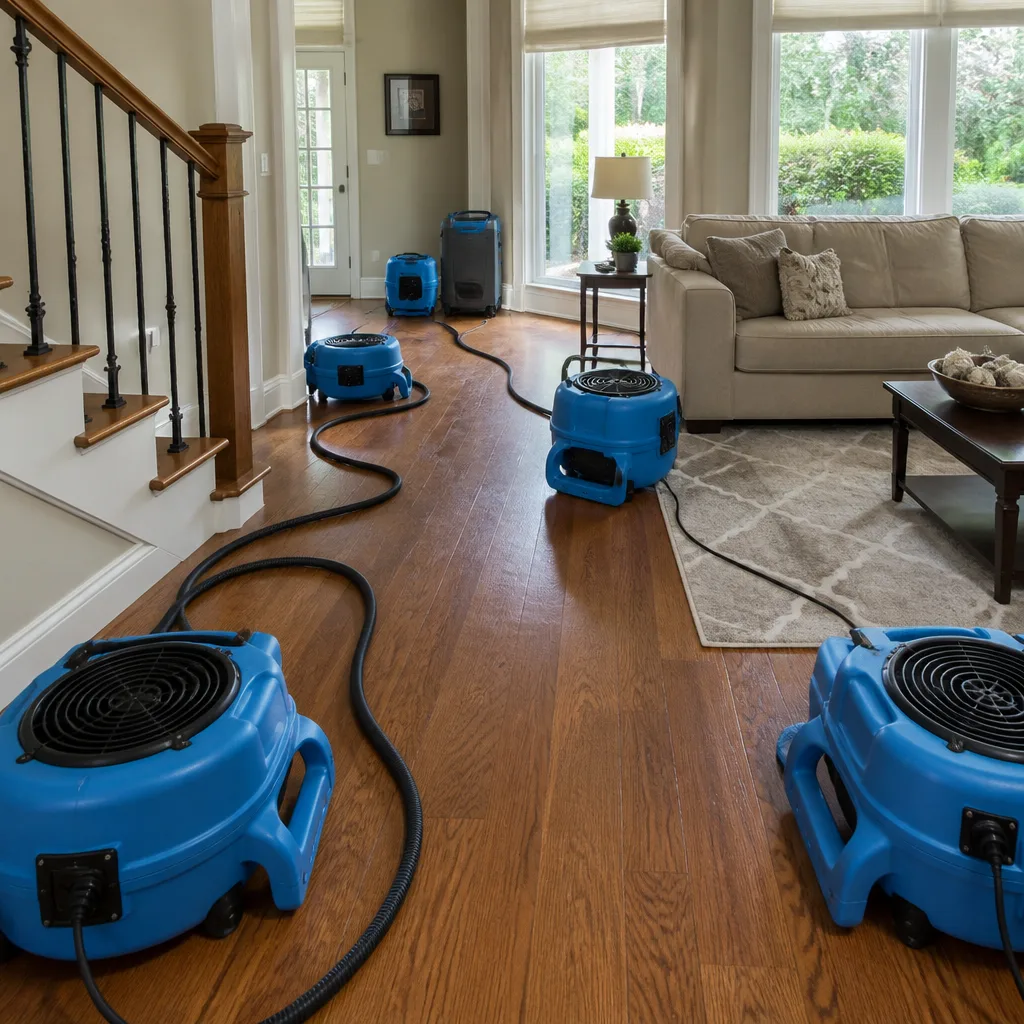 Water damage drying
 Fire & smoke cleanup
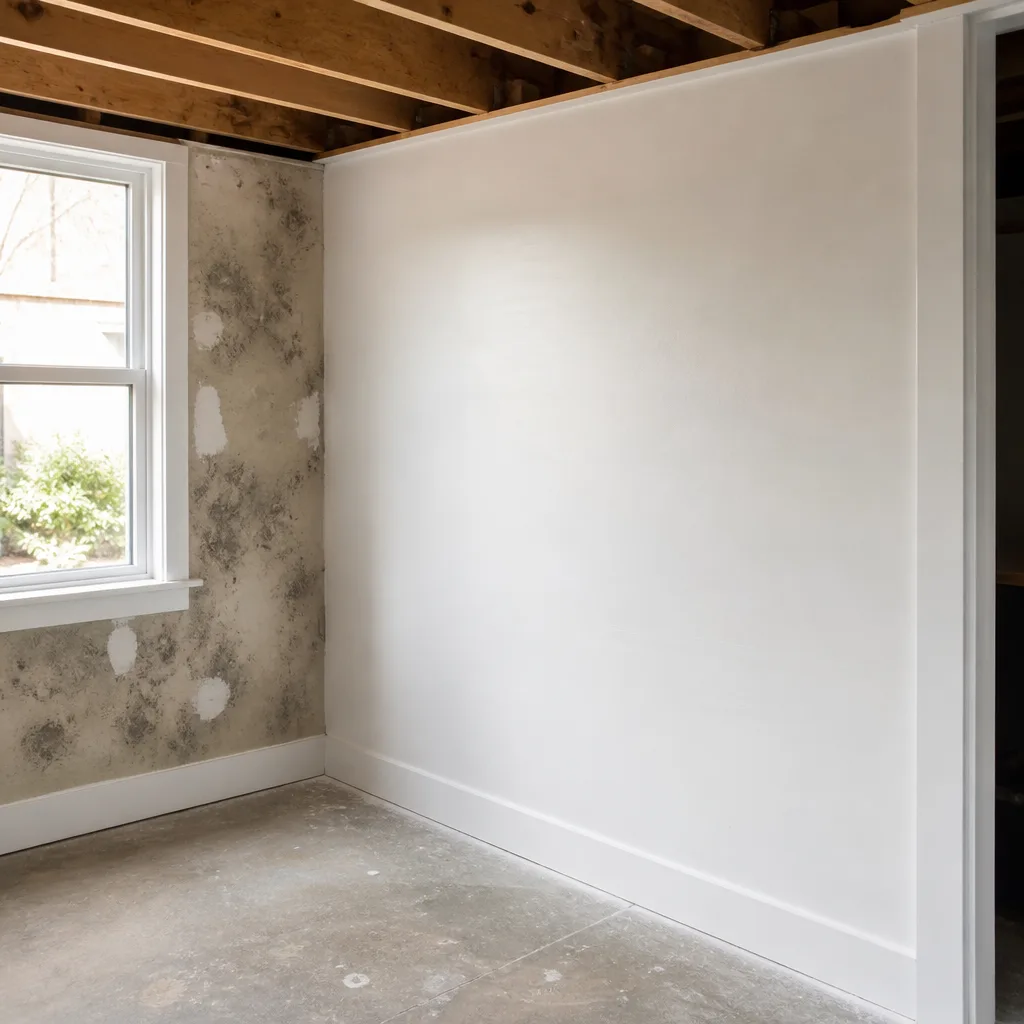 Mold remediation
 Storm response
 Sewage cleanup
 Reconstruction
Free visual inspection and a written scope of work before any mitigation begins - photos, moisture readings, and drying logs go in your claim file
The scope we write is the scope we bill. Anything new gets shown to you, in writing, before we touch it.
Get your free estimateDamage Restoration Cost Breakdown: The San Antonio Homeowner’s Reference for 2026
The most expensive restoration jobs in San Antonio aren’t the biggest floods. They’re the mid-size jobs where a homeowner accepted a verbal estimate and had no benchmark to push back when the invoice arrived 40% higher. Water drips through a ceiling on a Tuesday morning, a crew shows up by noon, walls get opened, fans run for four days, and three weeks later you’re staring at a line item for “containment and setup” that nobody mentioned. This guide names every cost category in plain language, gives real San Antonio price ranges for 2026, and explains exactly what drives each number up or down. For Damage Restoration Warning Signs: A San Antonio Homeowner’s Reference Guide, see our companion resource. You’ll learn how insurance adjusters price the work, why two identical-looking jobs can cost $1,800 or $11,000 apart, and what contract language actually protects you before anyone picks up a tool.
Restoration work we handle
Quick Answer
Water damage restoration in San Antonio typically costs between $1,800 and $7,500 for a standard residential job in 2026, with mold remediation running $2,200 to $9,000 and fire damage restoration ranging from $4,500 to $35,000 depending on square footage and smoke penetration. The single biggest cost driver is time: the same water event that costs $2,400 with a 24-hour response can climb past $9,000 if mitigation waits 72 hours, because drywall wicks moisture upward, hardwood cups and warps, and clean water degrades into a category that requires antimicrobial treatment and material disposal. Every number below reflects what we see in San Antonio homes, where slab foundations, high summer humidity, and 30+ inches of annual rainfall create restoration conditions that differ meaningfully from other Texas markets.
Table of Contents
- Line-by-Line Cost Categories: What You’re Actually Paying For
- The Three Variables That Move San Antonio Restoration Costs Most
- How Insurance Adjusters Price Restoration Work in San Antonio
- The Written-Price-First Advantage: Fixed Scope vs. Time and Materials
- 24-Hour vs. 72-Hour Response: The Dollar Cost of Waiting
- Why San Antonio Climate Affects Drying Time and Final Cost
- Mold and Fire Damage Costs: Separate Line Items, Separate Math
- Common Mistakes to Avoid
- When to Call a Professional
- Frequently Asked Questions
- The Bottom Line
Line-by-Line Cost Categories: What You’re Actually Paying For
Restoration invoices look intimidating because they’re written in trade shorthand. Here’s what each line actually means, with realistic 2026 San Antonio ranges. These are the numbers we see across the city, from older Alamo Heights homes with pier-and-beam foundations to newer Stone Oak construction on slab.
| Cost Category | What It Covers | San Antonio Range (2026) |
|---|---|---|
| Emergency extraction | Water removal using truck-mounted or portable extraction units. Priced per gallon or hourly. | $0.45 – $0.85 per gallon, or $125 – $250 per hour |
| Equipment placement | Daily rate for each dehumidifier and air mover. Most spaces need 1 dehumidifier and 4 – 6 air movers. | $45 – $75 per dehumidifier per day; $25 – $40 per air mover per day |
| Moisture monitoring | Daily visits to check drying progress with moisture meters and thermal imaging, adjusting equipment as readings drop. | $75 – $150 per visit |
| Antimicrobial application | EPA-registered treatment applied to affected surfaces to prevent mold growth. Priced per square foot. | $0.75 – $1.50 per square foot |
| Demolition and disposal | Removing wet drywall, baseboards, flooring, and hauling debris. Priced per linear foot or square foot. | $3 – $6 per linear foot of drywall cut; $25 – $50 per 30-yard dumpster load plus hauling fees |
| Containment setup | Plastic sheeting, negative air pressure, and sealing off affected areas from the rest of the home. | $1.50 – $3.00 per square foot of containment |
| Rebuild | Rehanging drywall, replacing insulation, painting, reinstalling baseboards and flooring. Scoped and priced like a remodel. | $28 – $65 per square foot of rebuild, depending on finishes |
A typical 400-square-foot water event in a San Antonio living room looks like this: extraction for $300 – $500, four days of drying with one dehumidifier and five air movers for $680 – $1,100, two monitoring visits for $150 – $300, antimicrobial on 400 square feet for $300 – $600, demolition of a 30-linear-foot wet wall section for $90 – $180, and disposal for $75 – $150. That’s $1,595 – $2,830 before rebuild. Once rebuild starts, add $2,000 – $6,000 depending on flooring and paint grade. The gap between the low and high number is where the written-scope conversation matters most.
For homeowners who want to understand the full picture of how these services unfold, our Water Damage Restoration in San Antonio page walks through the process step by step.
The Three Variables That Move San Antonio Restoration Costs Most
Two neighbors on the same street can have water damage in the same week, and one pays $2,200 while the other pays $8,400. The difference is never the contractor’s mood. It’s these three variables, in order of impact.
1. Water Category
The IICRC classifies water into three categories, and each one changes the math entirely. Category 1 is clean water from a supply line, an overflowing tub with no contaminants, or a broken pipe. Category 2 is gray water with some contamination: washing machine discharge, dishwasher overflow, or clean water that sat for more than 48 hours. Category 3 is black water containing sewage, floodwater, or anything from outside. In San Antonio, heavy spring storms can turn a Category 1 basement or garage intrusion into Category 3 within hours if stormwater backs up through a floor drain. Category 1 jobs need extraction, drying, and maybe minor demolition. Category 3 jobs require full PPE protocols, disposal of porous materials like drywall and carpet, and comprehensive antimicrobial treatment. That single classification shift adds $3,000 – $8,000 to the average San Antonio residential job.
2. Affected Material Type
Drywall pulls water up like a wick and typically gets cut out and replaced at the 24 – 48 hour mark. Hardwood floors can often be saved with specialized drying mats if response is fast, but cupped or warped boards after 72 hours usually mean sand-and-refinish or full replacement. San Antonio’s prevalence of slab foundations creates a distinct challenge: concrete holds moisture and releases it slowly, which extends drying time by 2 – 4 days compared to a wood-framed floor. Tile over slab is common in San Antonio homes, and while tile itself survives water fine, the moisture trapped beneath it can require drilling and injected drying (using systems like Injectidry) that adds $500 – $1,500 to the equipment line. Carpet and pad in a less-trafficked room is often the cheapest to address: extraction plus drying runs $400 – $800, while the same square footage of hardwood in a living room can run $2,000 – $6,000 to dry, sand, and refinish.
3. Elapsed Time Before Mitigation Began
Water does not pause. Every hour that passes moves the damage further up the wall, deeper into the subfloor, and further into the wood framing. At 24 hours, drywall is damp but often salvageable. At 48 hours, drywall wicking has reached the top of the affected wall cavity and mold spores begin colonizing. At 72 hours, structural materials are saturated, mold is actively growing, and what was a Category 1 job is now Category 2 or 3. The dollar difference between a 24-hour and 72-hour response on the same San Antonio water event is quantified in the section below. The short version: every day of delay roughly doubles the affected-material footprint in a typical single-story slab home.
We use professional-grade drying equipment from Dri-Eaz and Phoenix on every job, because cheap box-store fans move air but don’t remove the moisture load that San Antonio’s humidity keeps suspended in the air. The machine quality matters to the drying time, and drying time is money on any restoration invoice.
How Insurance Adjusters Price Restoration Work in San Antonio
If your claim goes through insurance, the adjuster almost certainly prices it in Xactimate, the industry-standard estimating software used by every major carrier in Texas. Xactimate assigns a unit price to every line item based on your San Antonio ZIP code, drawing from a database that reflects local material and labor costs. That’s good news in one sense: prices are location-tuned and don’t come from a corporate rate sheet made in Dallas. But it’s also where San Antonio homeowners get underpaid, because Xactimate line items are only as complete as the scope the adjuster entered.
The most commonly underpaid line items in San Antonio water claims:
- Content manipulation: moving furniture, boxing up belongings, and storing them while drying happens. Adjusters often forget this entirely or price it at half the labor hours it actually takes.
- Debris removal and dumpster fees: Xactimate has a line for it, but adjusters frequently enter the minimum haul distance and leave out city disposal fees.
- Moisture mapping and documentation: thermal imaging and moisture mapping aren’t always included in the initial scope, even though they’re required to prove the drying plan worked.
- Matching finishes: if your flooring exists in other rooms but only one room was damaged, Texas insurance rules often require the carrier to pay for a matching replacement, not just the damaged square footage. Adjusters routinely omit this.
- Repairs that become necessary after demolition: opening a wall can reveal pre-existing conditions like substandard wiring or dry rot that the adjuster didn’t see at the initial inspection.
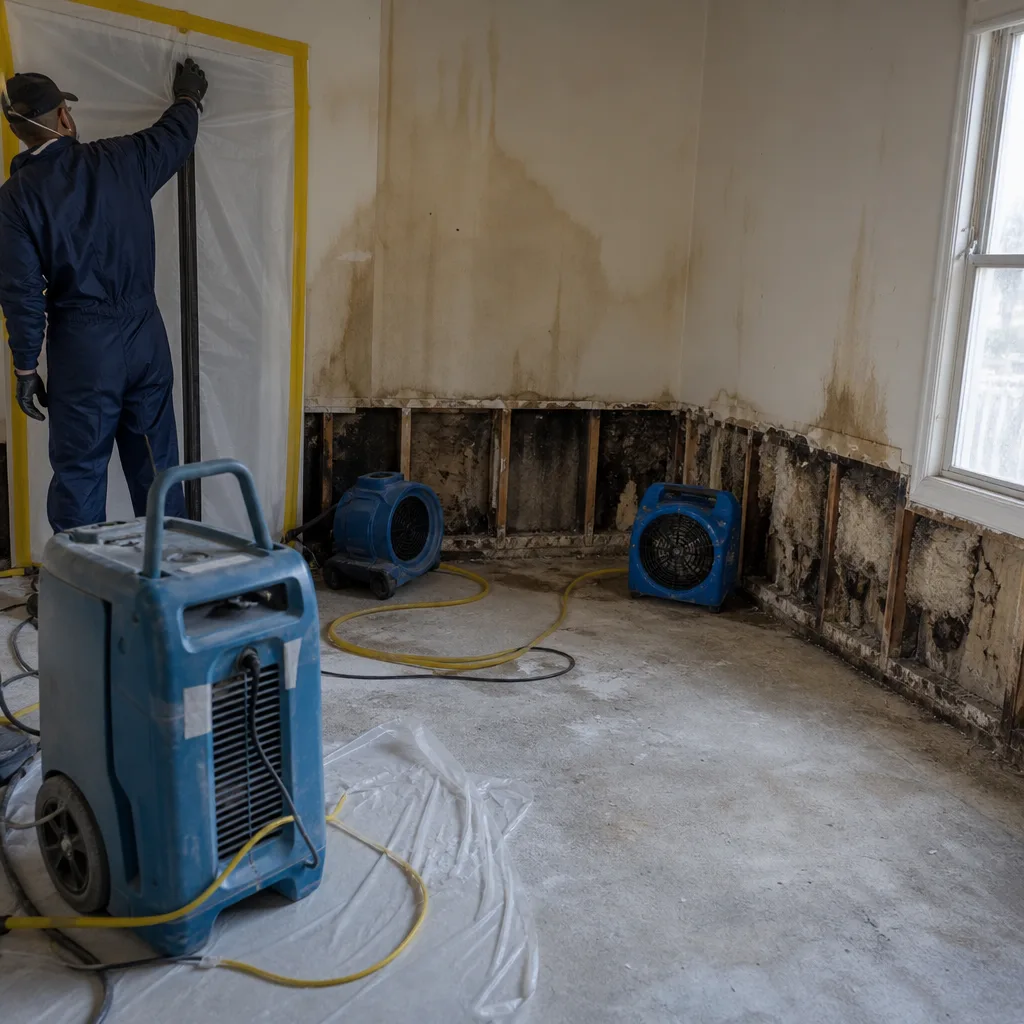
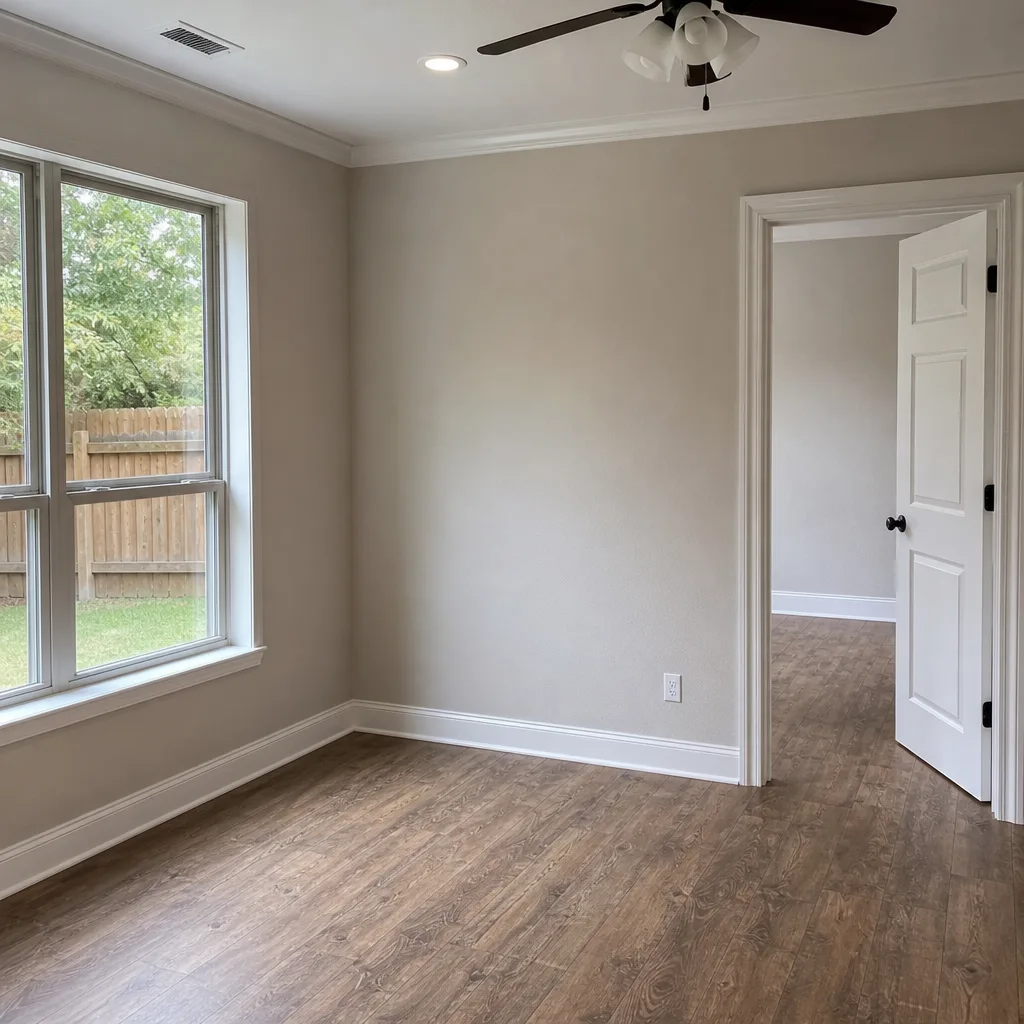
The practical answer: if your restoration contractor writes a thorough scope and accompanies it with photo documentation and moisture readings, you’ll have a much better chance of closing the gap between what the insurance carrier priced and what the work actually costs. That’s why we put a photo of the clean-up in your hands before the crew leaves. It’s not a courtesy. It’s a claim document.
The Written-Price-First Advantage: Fixed Scope vs. Time and Materials
Restoration bids come in two basic structures, and the difference between them explains a large share of the invoice horror stories that circulate in San Antonio neighborhoods. If you’re weighing whether to handle cleanup yourself, read our DIY vs Professional Damage Restoration: The San Antonio Homeowner’s Decision Guide first.
Time and materials means you’re paying for hours worked and materials used, priced after the fact. The contractor gives you an estimate, but the estimate is a guess, and the final invoice reflects reality, which is always more expensive than the guess. Every trip the crew makes, every extra day of equipment rental, every bag of disposal debris gets billed at a markup you didn’t approve in writing. This structure is common in emergency restoration because the damage isn’t fully visible until walls are opened. It’s also the structure that produces the 40%-over-estimate invoice.
Fixed scope means the contractor inspects the damage, writes a detailed scope of work covering everything from extraction through drying and rebuild, and gives you a written price before any work starts. If the scope changes because new damage is discovered, you get a change order with a revised price and you approve or decline it before the work continues. The protection in a fixed-scope estimate lives in the contract language. Here’s what to look for:
- “Change orders require written approval” – this prevents the crew from running up hours and billing you after the fact for work you never authorized.
- “Final invoice will not exceed the approved scope by more than X%” – a variance clause that caps surprise costs, usually 5 – 15% for undiscovered conditions.
- “Equipment rental ends when drying targets are met” – without this, some contractors leave dehumidifiers running longer than necessary because daily equipment rates are pure profit.
- “Scope includes all permits required by the City of San Antonio Development Services Department” – rebuild work on structural elements may require a permit, and a contractor who says “we’ll handle it” without including permit fees in the scope is setting up a surprise line item.
At Tidemark Water Damage San Antonio, the written price comes before any work starts, on every job, with no exceptions. That’s not a promotional tagline. It’s the operating rule of the Cedarwell Care Promise, and it’s the single most important protection a homeowner has in a restoration transaction.
24-Hour vs. 72-Hour Response: The Dollar Cost of Waiting
Let’s run the same water event through two scenarios. It’s a standard 300-square-foot living room in a San Antonio single-story slab home. A supply line under the kitchen sink bursts at 9 p.m. Water runs for an hour before it’s shut off. The affected area includes the kitchen, the adjoining living room, and part of a hallway.
Scenario A: 24-hour response. A crew arrives the next morning. Extraction removes standing water. Moisture mapping shows drywall is wet to a 2-foot wick height in the affected wall cavities. The crew cuts 3 linear feet of toe kick, places one Dri-Eaz dehumidifier and four air movers, and sets drying targets. Drying takes 3 days. Antimicrobial application covers 300 square feet. Drywall in the kitchen wall cavity is dried in place, not removed. Rebuild is limited to baseboards and toe kick replacement. Total: $1,800 – $2,600.
Scenario B: 72-hour response. The homeowner was out of town and discovered the water on day 3. The same water has now wicked 4 feet up the drywall, moved into wall cavities the initial spill never touched, and saturated the concrete slab to a depth that will extend drying time from 3 days to 7. Mold is visible on the back side of baseboards. Now the scope includes: full drywall removal from 62 linear feet of wall, insulation removal, antimicrobial on walls and slab, injection drying (Injectidry) in the slab, containment setup, 7 days of equipment, 5 monitoring visits, and disposal of 1,400 pounds of debris. Rebuild is framing repair, hanging, taping, floating, priming, and painting. Total: $7,500 – $12,500.
The water didn’t change. The time did. And in San Antonio, where summer temps routinely stay above 95°F, a wet, enclosed wall cavity becomes a mold incubator much faster than it would in a cooler, drier market. That’s the entire ballgame. Restoration is a time-critical service, not a home improvement project that can wait for a convenient appointment window.
Why San Antonio Climate Affects Drying Time and Final Cost
San Antonio’s climate plays a quiet but persistent role in restoration pricing. The city averages 30 – 35 inches of rain annually, concentrated in spring and fall storm seasons. Relative humidity from May through September commonly sits above 70%. That humidity is the enemy of drying.
Dehumidifiers don’t just remove the water that spilled on your floor. They remove the moisture load in the air too. In a San Antonio summer, a dehumidifier has to work harder and run longer to hit the same drying target that a unit in Lubbock or El Paso would hit in half the time. An extra 2 – 3 days of drying adds $200 – $450 in equipment charges and $150 – $300 in monitoring visits. That’s not a contractor padding an invoice. That’s physics, priced honestly.
The same humidity explains why mold is a year-round concern in San Antonio, not a rainy-season concern. A small roof leak that drips into an attic for six months can support mold growth even in winter. That’s one reason why Mold Remediation in San Antonio remains one of our most requested services. The conditions that create mold never really leave.
Mold and Fire Damage Costs: Separate Line Items, Separate Math
Mold and fire damage are priced differently from water, because the work itself is different. But both follow the same principle: the cost is driven by material affected, square footage, and the thoroughness of the containment and cleaning process.
Mold remediation in San Antonio runs $2,200 – $9,000 for a typical residential job in 2026. Small bathroom or closet mold with 20 – 40 square feet of affected material falls at the low end. Full attic remediation, crawl space treatment, or multi-room mold from a slow leak falls at the high end. The cost drivers are containment setup ($1.50 – $3.00 per square foot), HEPA air scrubbing ($200 – $450 per day), antimicrobial and biocide application, and removal and disposal of porous materials that cannot be cleaned. A tide mark is the line water leaves on a wall, and it’s the first thing our technicians look for on every job because it tells them exactly where the moisture drove mold spores and where cleanup needs to begin. Remediation that stops short of the tide mark is remediation that will fail.
Fire damage restoration in San Antonio spans a wider range: $4,500 – $35,000. A small kitchen grease fire with smoke damage in two rooms lands at the low end. A structural fire affecting multiple rooms, with smoke and soot throughout the home, lands at the high end. Fire work includes soot removal from every surface (often requiring specialized dry sponges and HEPA vacuuming), ozone or hydroxyl treatment for odor, duct cleaning, and rebuild of charred framing. San Antonio homes built in the 1960s and 1970s, common in areas like Castle Hills and parts of the East Side, often have materials that send soot deeper into wall cavities than newer construction, which adds time and cost to the cleaning phase. Our Fire Damage Restoration in San Antonio page covers the cleaning and rebuild process in more detail.
Common Mistakes to Avoid
- Accepting a verbal estimate. A verbal number is not a contract. In Texas, a verbal estimate offers almost no legal protection if the final invoice comes in higher. Insist on a written scope with a price before work starts.
- Waiting to see if it dries on its own. San Antonio humidity means it won’t. What feels dry to the touch is often still 20% moisture content in the drywall, which is a breeding ground for mold.
- Using a contractor who doesn’t document moisture readings. If you can’t see daily moisture readings, you can’t verify the drying plan worked or prove it to your insurance carrier. Demand documentation.
- Signing a work authorization without reading the change-order clause. The change-order language is the most important paragraph in the agreement. If it doesn’t require your written approval before scope changes, you’re agreeing to time-and-materials billing by default.
- Paying the full invoice before the rebuild passes inspection. Restoration is not done until the rebuild is done and the City of San Antonio has signed off where permits were required. Don’t pay the final draw until both conditions are met.
- Assuming insurance covers everything. Deductibles, policy limits, and excluded categories (like mold without an underlying covered peril) all create out-of-pocket exposure. Ask your contractor to work directly with your adjuster on the scope so you aren’t the middleman.
When to Call a Professional
You should call a restoration professional the moment water has contacted drywall, flooring, or structural framing and you can’t remove all moisture within 24 hours using towels, mops, and your own wet-dry vacuum. For permitting questions, see Damage Restoration Permits, Codes & Inspections in TX: What You Need to Know. That’s the line. A small spill on tile you can wipe up completely is a cleaning task. Water that has soaked into drywall or under baseboards is a restoration job, and attempting to dry it with box-store fans in San Antonio humidity will almost always result in a more expensive remediation later. Same goes for any visible mold larger than a dinner plate, any fire damage involving smoke, and any water event that involved sewage or floodwater. Tidemark Water Damage San Antonio offers free estimates in San Antonio. Call (325) 230-0537 and a real person answers, 24/7. That’s not a voicemail tree. It’s a phone that gets picked up.
Frequently Asked Questions
Water damage restoration in San Antonio typically costs $1,800 to $7,500 for a standard single-room residential job, with the majority of mid-size events landing between $2,500 and $4,500. The total depends on water category, affected materials, and how quickly mitigation began. Call (325) 230-0537 for an exact quote. Estimates are free, and the written price comes before any work starts.
Most homeowners policies cover sudden and accidental water damage from events like burst pipes, water heater failures, and appliance malfunctions, subject to your deductible. Gradual leaks, floodwater from outside, and mold that is not tied to a covered peril are frequently excluded. The best way to protect your claim is to document everything with photos and moisture readings, and have your restoration contractor work directly with your adjuster on the scope.
Within hours, if you call the right company. Tidemark Water Damage San Antonio runs live phone support 24/7 and dispatches same-day crews anywhere in the San Antonio metro area, from Helotes to Converse to Schertz. The goal is extraction and equipment placement within 24 hours of the water event, because every day after that adds cost and extends drying time.
If the affected area is limited to hard surfaces with no water penetration into drywall or flooring, a thorough cleaning may be sufficient. If water has wicked into drywall, saturated grout lines, or penetrated any porous material, cleaning alone will leave moisture behind, and that moisture becomes mold. A professional moisture assessment with documented readings is the only way to know which situation you have. The assessment should be free and the findings should be yours to keep.
At Tidemark Water Damage San Antonio, we coordinate directly with your adjuster. Our scope documentation, photo records, and moisture readings go to the carrier with the goal of getting your claim priced accurately the first time. You don’t have to translate restoration trade language into insurance language. That’s our job, and it’s included in the cost of every restoration we perform.
It covers the restoration work we performed. If the drying plan failed, if mold returns in an area we remediated, if the rebuild work doesn’t hold up, we make it right at no additional cost for a full year. The promise is backed by the Cedarwell Care Promise network and it’s in writing. No fine-print qualification. If it’s not done right, we make it right. Call (325) 230-0537 with any follow-up and the same team that did the work will respond.
The Bottom Line
San Antonio restoration costs in 2026 are knowable. The line items are standard, the price ranges are published, and the variables that move the numbers are identifiable before a single tool comes off the truck. What makes restoration expensive isn’t mysterious industry pricing. It’s opacity: verbal estimates, vague scopes, time-and-materials billing, and a homeowner who doesn’t know what a dehumidifier day rate should cost. Learn the categories, demand a written price, document the moisture readings, and coordinate the claim with someone who has done it before. The goal is not just a fixed home. It’s a home fixed for a price you agreed to, left clean and dry, with no surprises waiting in the invoice. That’s what we do at Tidemark Water Damage San Antonio home, and it’s what every San Antonio homeowner should expect from any restoration company that answers the phone.
Written by Rick Sumner, Owner at Tidemark Water Damage San Antonio, serving San Antonio since 2006. Browse more guides & resources from our team.
See the difference
 Before
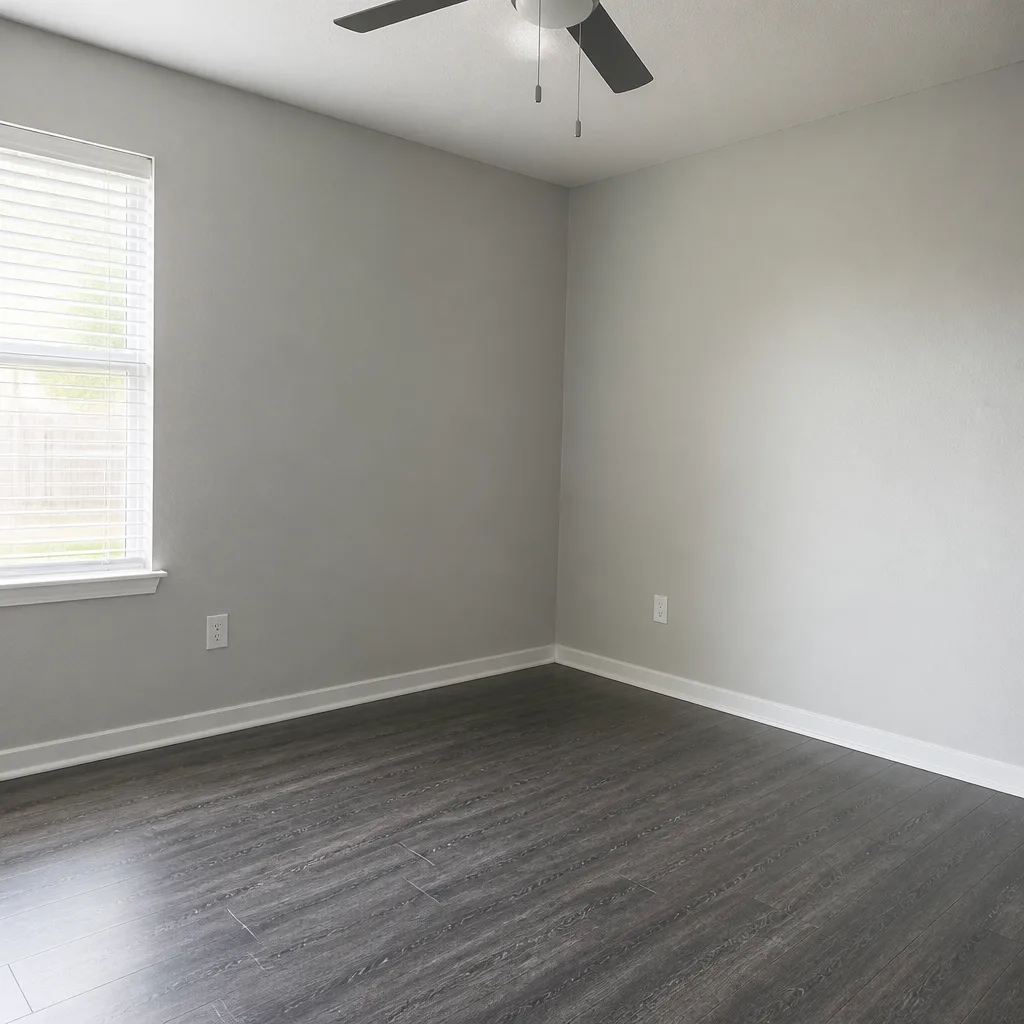
 After
After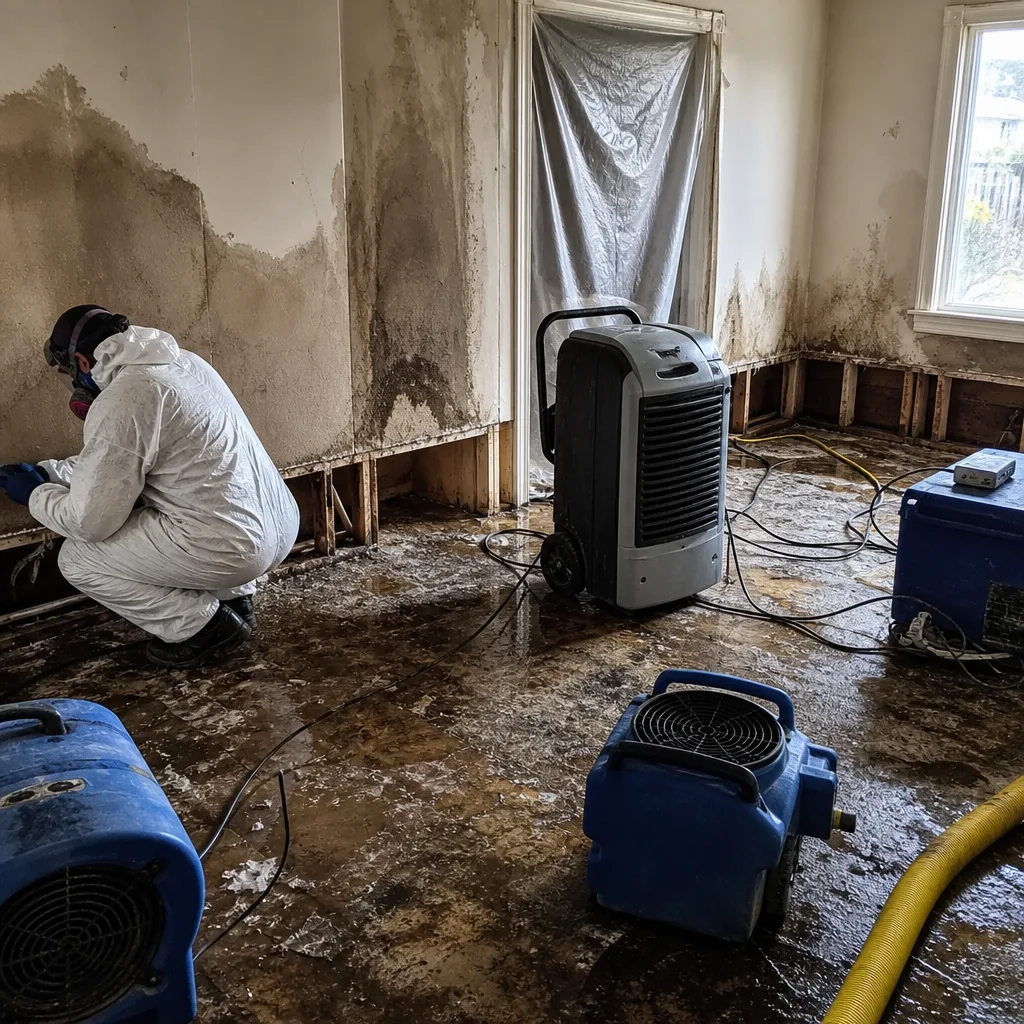 Before
 After
After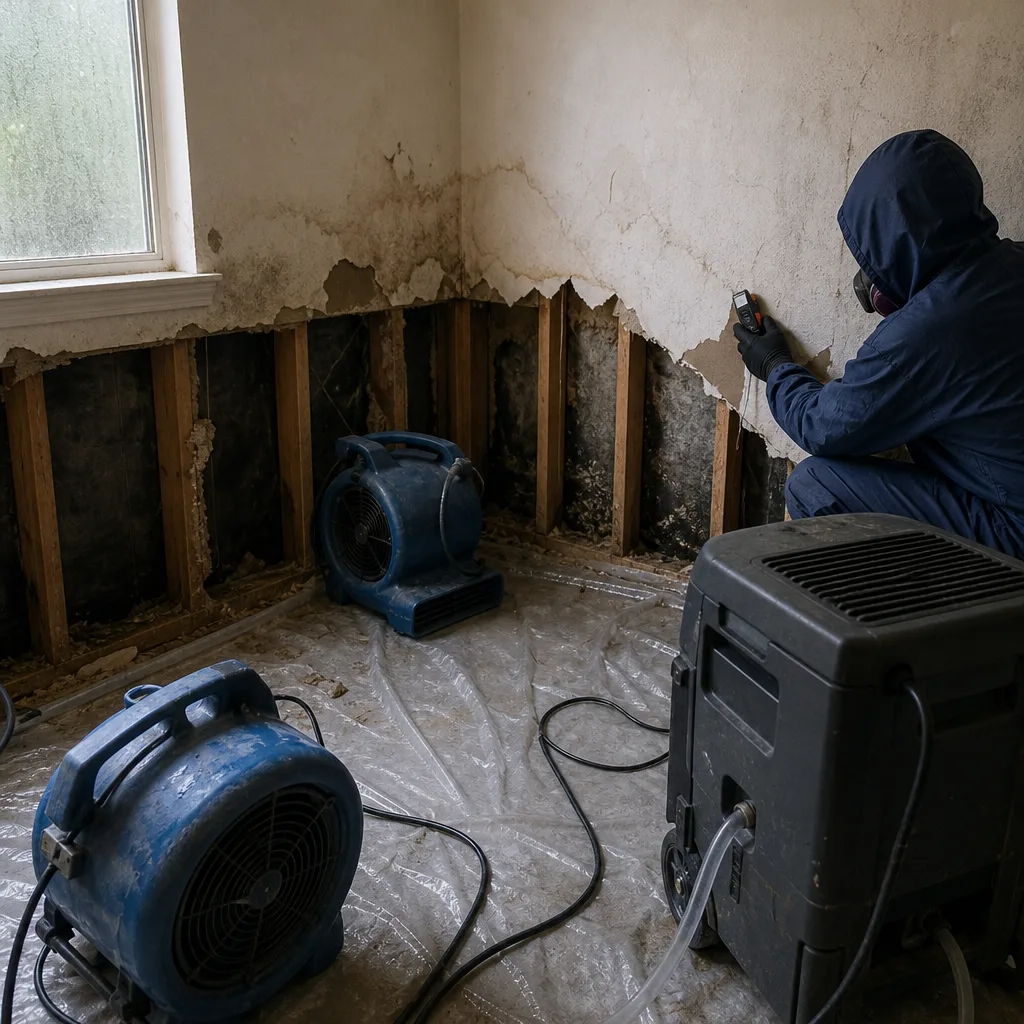 Before
 After
After